
OBITUARY
Charles Leroy Aumiller
August 2, 1931 – September 17, 2025
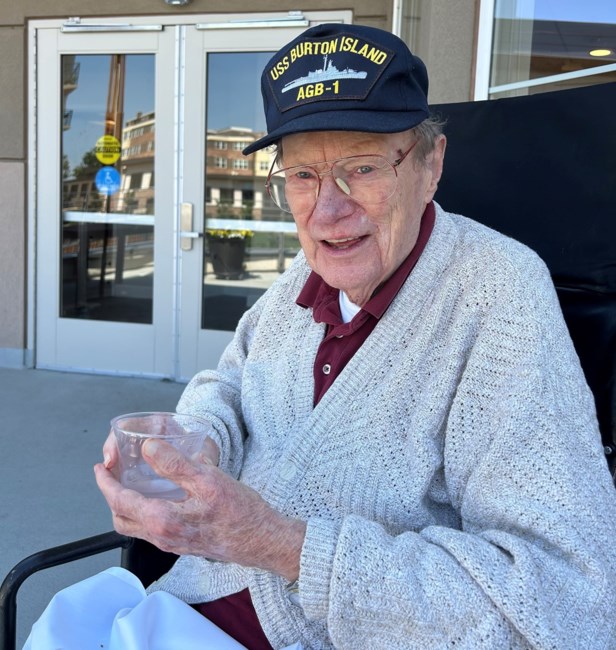
(From stories told by Charlie)
Charlie was born in Illinois and grew up between Joliet and Lockport in a place called Fairmont. Streets there didn’t have sidewalks so the kids just walked down the middle of the road, shoes or not. The neighborhood featured Johnny Costa’s Grocery, McCauley’s gas station, at least three saloons, the grade school, a future Major League ballplayer, Uncles, Aunts, and Grandparents. His neighborhood friends were the children or grandchildren of immigrants. The adults there included wallpaper hangers, grocers, carpenters, and employees at the State Penitentiary. His Grandfather was an iron worker who built the Rialto Theater and a couple big bridges that are still in service in downtown Joliet. Charlie’s Dad was a printer who was not always easy to get along with but was always interesting. Charlie and his Dad were happiest together when they were working on something that his Dad liked to do: Photography, flying, raising parakeets, building a garage, or building tourist cabins (they made their own cinderblocks!). It was during these times that Charlie learned that if he didn’t know how to do something, he should give it a try anyway and he could figure it out. It’s worth noting that Charlie and his immediate family never did time in the two prisons nearby, but they did occasionally peer in over the wall at the prisoners in the quarry, attend movies in the prison yard, and they hired a convicted murderer “on the inside” to do some taxidermy for them.
Charlie’s life was a series of adventures, and a great glimpse into history. He had a paper route in the days when paper boys were required to collect fees from their customers every week, riding a bike that he maintained using Vaseline for bearing grease, and which survived a head-on collision with Phyllis Nordenberg that destroyed her bike, sent Charlie to the hospital, and erased several hours of his memory. Phyllis was not injured.
He took a two-day train ride at age 8 from Chicago to Abilene Kansas, with a stop in Topeka to stay the night with his Aunt Gail and her big angora tomcat, Jiggs. Near Abilene, he spent a few weeks with his cousin Virgil, who taught him how to chase geese, catch fish, milk a cow, tunnel into haystacks, and rapid-fire a .22 rifle like a machine gun.
He was on a Sunday drive with his family when they heard on the radio that the Japanese had bombed Pearl Harbor. Some of the older boys in his neighborhood went overseas after that, and at least two of them didn’t come back. Most of what he knew about World War II, he learned from those who lived through it. He attended college with GIs who inspired him with their steely intolerance of childish Freshman hazing. He knew pilots and bombardiers who survived their aircraft being shot down. He had an uncle who rowed ashore and blew something up on a solo mission to a small island in the South Pacific.
Four years after The War, he and four High School friends drove a 20-year-old Model A Ford from Missouri to Idaho, up and down mountains, stopping at multiple junkyards to replace parts that had fallen off, rattled loose, blown out, or shattered. When they arrived in Idaho, they joined the Forest Service for the Summer where they waged war on a pine tree fungus by uprooting gooseberry bushes (the intermediate host) and spraying sticky smelly hazardous chemicals on pine trees. His family moved to Colorado while he was gone, so his buddies dropped him off in Denver on their way back to their homes. The five of them had purchased the car for less than the price of five round-trip bus tickets, and the guy who kept the car paid each of the others their share back at the end of the trip.
College and Medical School followed, as did a romance with a certain Medical Technologist from Minnesota. His love for her was immeasurable.
The adventures continued for Charlie after he and Helen were married. He joined the Navy to avoid getting drafted (the logic seemed to make sense at the time), and he shipped off to the Aleutian Islands, Hawaii, and Japan. He didn’t learn to swear in the Navy, but he definitely sharpened his appreciation of swearing as an artform. Oh, and by the time he got out of the Navy, he and Helen had two little daughters.
A third daughter followed when they moved back to Denver, and then a son after they settled in Boulder. They took all those kids rafting down the Green River, with some creative math that allowed the youngest to “qualify” for the trip. They took them all to Mexico a couple years later and then to Europe a couple years after that. Somewhere in there, the whole family traveled deep into the mountains of Colorado by horseback to camp for a week each of two successive summers. On both trips, Charlie was launched off the back of the horse that he and his son were riding. Both times, Charlie landed hard and the boy landed on Charlie. One of those falls erased a few more hours of Charlie’s memory. The kid was not injured, and both horses were just fine as well.
Charlie’s career as a pediatrician included several diagnoses of his favorite disease, Spinal Meningitis. He especially liked that disease because it’s not difficult to diagnose and it’s treatable. He had a hard time talking about the few patients of his who had incurable diseases. He became a doctor to help children, and it was heartbreaking to know that, for some of them, nothing could help. Most of his medical practice, however, involved the more common things like colds, yearly physicals, strep throat, stitched wounds, etc. He did make at least one particularly rewarding diagnosis of a rare disorder by smell. It wasn’t until a few years after his retirement, at a softball game, that he finally got to straighten a dislocated finger, using the technique that had been taught to him some 60 years earlier by Red Haller, crane operator and father of future San Francisco Giants Catcher Tom Haller. Red had fixed young Charlie’s finger after it had been dislocated playing catch with one of Red’s boys in front of their house.
Immediately after retiring, Charlie and Helen took a giant road trip with their pop-up camper-trailer (7 weeks, 5700 miles), through the Midwest and Northeast and parts of Canada. Mostly because it was just the two of them and they had zero obligations, it was the best trip they ever took. On other occasions, they visited Turkey, Germany, England, and Greece. They visited relatives in Denmark, Sweden, and Norway, amazed and very pleased at the gracious hospitality of these distant relatives. Charlie had the opportunity to catch a glimpse of the Russian Shore north of the Arctic Circle on the East side from a Navy icebreaker and on the West side from a cruise ship. He had a much more close-up experience with Russia when he flew alone into Moscow at night where, after overcoming several barriers of language and custom, he met up with a medical group and they continued on to Tajikistan as part Boulder’s Sister City project.
Charlie learned a lot from his Dad, from his Grandfather, from friends and neighbors, and from his own determination. He started collecting tools in High School when he found a boxmaker’s hatchet in an alley, and he was a member of the Rocky Mountain Tool Collectors Association for more than 30 years. He did a lot of woodworking, making cradles for each of his children’s first-born, making toys for grandchildren, and clocks and furniture for whoever needed them. He learned to swim when he was 90. He learned about relating to children from his Mother, then from his children’s Mother, then from his children, grandchildren, and great-grandchildren. He was good at it.
Helen and Charlie chose to live in a wonderful retirement community in Boulder when they were in their 70s. They made a lot of new friends and hosted family there for many years. When Charlie’s mobility and cognitive functions declined, he maintained a strong desire to keep doing things and going places. At 93, he made hardwood chopsticks for his kids and he also dabbled in pottery and painting. One late night in nursing care just before his 94th birthday, he managed to sneak past the staff in his wheelchair and he rode the elevator down to the parking garage where he pulled the fire alarm (it said “PULL”). And then he just smiled when his kids suggested that he maybe shouldn’t do that again.
Charlie’s parents were Spencer and Marie (Johnson) Aumiller. Charlie's dear wife Helen, son-in-law Doug Fairbairn, and brother-in-law Jerry Hendershot preceded him in death. He is survived by his sister Carol of Boise Idaho, brother Robert of Port Orange Florida, and his four Children: Ann Fairbairn lives in Arvada Colorado, Susan Finnegan lives in Longmont Colorado with her husband Pat. Barbara Vickers lives in Grand Rapids Michigan with her husband David. Phil Aumiller and his wife Wendi live in Lyons Colorado. Charlie’s 11 grandchildren and 13 great-grandchildren live in Colorado, Michigan, and Illinois.
Show your support
Add a Memory
Share Obituary
Get Reminders
Services
SHARE OBITUARYSHARE
- GET REMINDERS
v.1.18.0