OBITUARY
Charles Merrill Neinas
January 18, 1932 – December 16, 2025
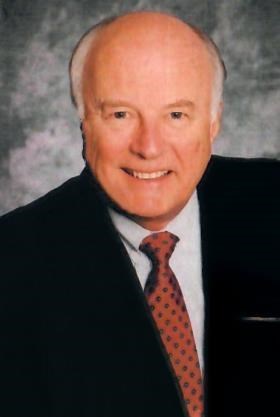
Chuck Neinas, a visionary college athletics administrator whose impressive career in college athletics started during the Eisenhower Administration and spearheaded to this day the most significant change in football television, passed away at his home in Boulder, Colorado on December 16, 2025.
Born Charles Merrill Neinas in Marshfield, Wisconsin on January 18, 1932, Chuck was raised in Wisconsin, graduated at the top of his class in high school and soon after enlisted in U.S. Navy. The service offered him training on a submarine, a “summer job,” but after such training, he was called up the following fall, as a seaman during the Korean War. He was stationed for two years in Pearl Harbor, serving on the submarines named Queenfish and Tilefish. When he returned to the States, he enrolled at the University of Wisconsin-Stevens Point and played on the Pointers’ basketball team. As a bit older student, he and other veterans organized their own “fraternity”, the SIASEFI’s, and continued to have reunions to this day. He was inducted into the school’s “Pointer Hall of Fame” for his accomplishments as a student-athlete and received the Distinguished Alumni Award from UW-Stevens Point at the school’s 1979 Homecoming football game.
Neinas transferred to the University of Wisconsin-Madison in 1955 where he finished his studies, earning a bachelor’s degree in history in 1957 – with an interest in Broadcast Journalism. While at UW-Madison, he began what would become a varied and illustrious seven-decade career in athletics, first working as a student assistant in the Badgers’ athletic department. After graduating, he handled play-by-play duties for football and basketball and was responsible for all production on radio that broadcast UW games for five years. He was the sports director at WBEV-Radio in Beaver Dam and WKOW in Madison before eventually ascending in 1960 to become the news and sports director at WEAQ-AM in Eau Claire, WI. He also announced the state high school basketball championships on television. Neinas served as the commissioner of the North-West Basketball League for the ’60-61 season, his first taste in sports administration.
On September 1, 1961, he relocated to Kansas City where he joined the small staff of the NCAA under Walter Byers, its longtime executive director. As Byers’ assistant executive director, Neinas with his basketball background was given the responsibility to run the NCAA’s basketball tournament and helped expand the event from eight to 16 teams. This was where he first dabbled in television, as he was the NCAA’s liaison to the networks managing the broadcast rights. He served on the NCAA Television Committee for five years and chaired the NCAA International Relations Committee. He worked to add a 14th week of televised football games and the approval of additional bowl games in the postseason.
In 1970, his final year with the NCAA, a tumultuous time in American history, he escorted a group of college athletes on a Goodwill Tour to Vietnam; he would do something similar in 1973 when he was the commissioner of the Big Eight Conference, taking a select group of college basketball players to China a year after President Richard Nixon became the first U.S. President to ever visit the communist country. With Title IX signed into legislation in 1972, he helped prepare the schools for the creation of the AIAW (Association of Intercollegiate Athletics for Women) and eventual absorption into the NCAA in the early 1980’s.
Neinas was named the Big Eight’s commissioner on October 6, 1971, by unanimous vote of the member schools faculty representatives, succeeding good friend Wayne Duke, who had taken a similar position with the Big Ten Conference. With the Big Eight also located in Kansas City, he would spend the next eight years embarking on a more energetic and ambitious promotional program for the Big Eight, upgrading its championship events and experiences for the student-athletes, and developing greater communication among coaches’ groups, athletic directors and faculty representatives. While with the Big Eight, he served as chairman of the ABAUSA Games Committee for Men, which was responsible for selecting coaches and players for the Pan American and Olympic Games as well as other international competitions (the organization eventually became USA Basketball). During his Big Eight tenure, Neinas chaired the committee that recommended the NCAA withdraw from the United States Olympic Committee (USOC). That led to a major reorganization and the passing of the Ted Stevens Amateur Sports Act that has since governed the Olympics in the USA.
The College Football Association (CFA) was an informal organization, formed in 1977 by members from most of the major football conferences to address their frustrations with the NCAA, especially as it related to a lack of promoting and marketing college football and the NCAA voting rules and limitations on television appearances, where the NCAA had a monopoly since the 1950s. Three years later, in 1980 the CFA retained Neinas as its paid executive director to lead the fledgling organization and develop ways the conferences could have more control over their television rights. He had a staff of one. Neinas was quoted in the press saying that he “considered it a professional challenge,” while emphasizing there were no plans for major football powers to exit the NCAA. After marrying Patricia L. Pacey, Ph.D., in August 1981, he established the CFA’s home base in Boulder, where he became a frequent attendee of University of Colorado games.
But within four years, working with the universities of Georgia and Oklahoma, he played a pivotal role in changing the landscape of college football forever. Admitting that the NCAA and the CFA had differing opinions on how to run the sport, television rights were at the forefront of change. A 1984 Supreme Court ruling in favor of the CFA and the two schools opened the door to conferences being able to negotiate their own broadcast rights – instead of the NCAA – and keep the revenue to share among its institutions. Soon Saturdays (that had only the “Game of the Week” and on occasion maybe one other televised game) would expand game offerings and then explode with the advent of cable television and national (e.g. ESPN) and regional networks, with local stations also permitted to broadcast games outside of national windows.
The CFA, under his direction before it disbanded in 1997, brought home deals worth billions in the 1980s and '90s, and those huge contracts set the stage for today's industry, currently highlighted by a TV deal worth $7.8 billion for the College Football Playoff. The CFA’s reign ended when conferences took full control of their TV rights, as the Bowl Alliance – created in 1992 – morphed into the Bowl Championship Series (BCS) ahead of the 1998 season.
In 1996, he was presented with the Amos Alonzo Stagg Award by the American Football Coaches Association (AFCA), which is given to the "individual, group or institution whose services have been outstanding in the advancement of the best interests of football.” In 1999, he received both the NFF’s Outstanding Contribution to College Football Award and the James J. Corbett Memorial Award from the National Association of Collegiate Directors of Athletics (NACDA).
When the CFA disbanded, Neinas created Neinas Sports Services, a consulting firm that helped universities fill vacant positions, most notably athletic directors and head football and basketball coaches. He also did in-depth athletic department evaluations. In the late 1990’s, he was the acting chief executive officer and chairman of the board of Ascent Entertainment Group, the former owners of the Colorado Avalanche and Denver Nuggets and was instrumental in negotiating Ascent selling the teams and the then-Pepsi Center to current owner Stan Kroenke in April 2000.
In 2011, still active with his consulting firm, he made time to serve as the interim commissioner of the Big 12 Conference for the 2011-12 season. He saw the need to immediately stabilize the conference after the defections of Colorado and Nebraska a year earlier, followed by Missouri and Texas A&M leaving for the Southeastern Conference. He oversaw the additions of the TCU and West Virginia to bolster membership back to 10 institutions. In recognition of his service to the Conference, the Big 12’s football coach of the year award has been named in his honor since the 2012 season.
He also was the representative for college sports with the USOC, an emeritus member of the National Football Foundation Board of Trustees and was active with Patriot’s Day, an organization created in 2014 to aid, assist and support United States Military veterans who return after their service to become students at the University of Colorado, Boulder. His final career honor came just last year (2024), when he was inducted into the Coca-Cola Bowl Season Hall of Fame.
A true icon and visionary in college athletics, especially football, his “administrative tree” of those who learned and worked under him is most impressive. Those include Steve Hatchell, the current President and CEO of the National Football Foundation (and former Southwest and Big 12 Conference commissioner); Bill Hancock, retired executive director of the College Football Playoff and former associate Big Eight commissioner; Dave Ogrean, former executive director of USA Hockey and one-time Neinas assistant at the CFA; former University of Texas athletic director DeLoss Dodds); former Colorado, Cincinnati and Southern California athletic director Mike Bohn; long-time bowl executive Tom Starr; Kirby Hocutt (Texas Tech athletic director); Sam Baker (retired athletic director at Georgia Southern University); the late Prentice Gautt (Big Eight associate commissioner) and the late Dick Martin (former Missouri Valley Conference commissioner and West Virginia athletic director).
On a personal level Chuck was a total sport “junkie.” In addition to being a passionate fan of football and basketball, (high school sports he lettered in) he also loved watching hockey. Chuck enjoyed recreational golf and tennis and snow skied. He enjoyed many bicycling trips with friends. His last trip was in Portugal in 2019. At 87 he was Backroads’ oldest biker. Another claim to fame was attending 49 consecutive NCAA Final Fours. For his 50th the Pacey/Neinas team threw a gala event for scores of friends dubbed the “Better than Being There” at their home in Boulder. He also enjoyed traveling, visiting six continents.
He is survived by his wife of 44½ years, Patricia (Patty or just P), two sons, Toby and Andy (Karen), nephew Jay Neinas, six grandchildren, Alec, Philip, Molly, Charlie, Henry and Eddy plus Patty’s siblings, Mike and Terry Kaiser, Mike and Mary Ward and Phil and Rose Pacey, in addition to other extended family members.
In lieu of flowers, donations to Patriot’s Day (www.patriotsday.org), an organization Chuck cared much about, would be preferred by the family and greatly appreciated. A Memorial Service will be held on Friday, January 23, 2026.
Tributes
Mike Bohn, Former Athletic Director: Cincinnati, Colorado & Southern California (CFA staff 1992-95; also on the staffs of the Air Force Academy and Colorado State)
“Chuck exemplified the highest level of a friend. Through building lifelong relationships, he taught and inspired people in the sporting world to lead effectively. His legacy of vision, innovation, and communication acumen will forever serve as the foundation for the Intercollegiate Athletics enterprise to stand on. “His incomparable listening, intellect, integrity, and humility combined to create an aura of respect from all constituents. His talent to read a room and unite towards the greater good is beyond compare. Name a major issue in college sports since the 1960s and Chuck was right in the thick of it. He leaves the field now at a moment when it could benefit from his wisdom, intellect, and instinct for consensus in order to answer the most pressing questions facing its future.“
Tad Boyles, University of Colorado Head Basketball Coach
I did not meet Chuck until the later stage of his life. There are certain people you meet and feel an immediate connection with, Chuck Neinas was one of those people for me. His professional work and accomplishments speak for themselves. What made Chuck so special was his honesty, his integrity, his quick wit, and his infectiously warm smile. Chuck was a great man that will be missed by the countless people whose lives he touched. I feel very lucky to be one of those people. I miss him dearly and always will.
Barry Switzer, Former University of Oklahoma Head Coach
“Chuck was a great friend, more like a big brother – we were separated by only five years. Our relationship started over 50 years ago. When they came to Norman, he and Patty always stayed with us. After my coaching career, I was to be honored with a heroic statue, and I selected him to induct me! Today it stands alongside Bud (Wilkinson) and Benny Owens statues, so it was an incredible honor to have Chuck play such a significant role in the presentation. His speech is framed on the wall in my office , uniquely written. I loved the man!”
DeLoss Dodds, Former University of Texas Athletic Director
“Chuck was the reason that I could have had a successful career in athletic administration. I owe it all to him, he changed my world.
“I was the track coach at Kansas State, and he hired me to be the assistant commissioner at the Big Eight Conference. I could not have had a better teacher, and he convinced the president at Kansas State to hire me as the athletic director. From there, I went to the University of Texas as its athletic director and was there for 32 years. Chuck put me on the CFA’s television committee and made me the chair, and we worked together on several TV contracts for the CFA and others, the last one for Big 12 which was a really good one.“Chuck was my mentor in my professional life, and a great friend in my personal life, both he and Patty.”
Bill Hancock, College Football Playoff Executive Director (retired)
“There will never be another Chuck Neinas. His intellect was exceeded only by the overwhelming size of his heart. He was a college football savant but also a keen observer of the world, with a massive and diverse group of friends and a vast assortment of passions. One minute he could be dissecting the pros and cons of the football veer offense, and the next minute he would launch into an educated analysis of the history of conflict in the Middle East. To know Chuck was to love Chuck.”
Steve Hatchell, President and CEO of the National Football Foundation "College athletics has lost one of the true giants of our profession, and I have lost a dear friend and mentor. Chuck Neinas was a visionary in every sense of the word. From his time at the NCAA to his leadership of the Big Eight and the CFA, he didn't just manage change, he drove it. The modern landscape of college football, particularly the way we consume it on television today, can be traced directly back to his foresight and determination to give schools control over their TV rights. "On a personal level, I had the distinct privilege of working under Chuck during our time at the Big Eight Conference,” Hatchell continued. “He taught me that while the spectacle of the game is important, the integrity and welfare of the student-athlete must always come first. The National Football Foundation and the entire college football community are better because Chuck Neinas was a part of it, and we are deeply saddened by his passing."
Kirby Hocutt, Texas Tech Athletic Director
“Chuck Neinas had an immeasurable impact on me and on my professional life. In 1995, Chuck offered me an internship with the College Football Association, and for the next year and a half I had the privilege of learning from the very best. Even in his final days, he continued to encourage me, and I always looked forward to his text messages and phone calls. This was especially true during this Texas Tech football season. He loved the game. “Chuck and Patty treated me like family. Through his example and his daily approach, Chuck showed me that athletic administration was the career I wanted to pursue. There was always fun mixed in to each day. Chuck, Mike Bohn, Sam Baker, and I would go to lunch at Gunpark Deli and settle the bill with a game of rock, paper, scissors. Patty would quietly slip me a little extra cash because she thought Chuck underpaid me for mowing their yard – while Chuck believed sending me home with food and a couple of Leinenkugel’s was more than fair, and truthfully, it was. “Chuck gave me opportunities to travel and represent the CFA at countless games and events. Being able to say that I worked for Chuck Neinas opened doors throughout my career, but more importantly, it shaped who I am professionally. I will always be grateful for his mentorship and friendship.”
Bill Marolt, Former University of Colorado Athletic Director
“When I returned to Boulder as Colorado’s athletic director, Chuck was one of the first to welcome me back. He was close to (former AD) Eddie Crowder and after moving there, he was a great supporter of the university. Chuck was an innovative leader whose vision and work created the opportunity for millions of fans to enjoy college football on television like never before. It’s not unrealistic to say that no one individually had more of an effect of the landscape than Chuck Neinas.”
Dave Ogrean, Former USA Hockey Executive Director (and one-time Neinas assistant at the CFA)
“It was viewed as a merit badge in the world of sports to have worked for Chuck Neinas. I think of Chuck as extremely smart, always composed, amazingly organized and very detail-oriented. What I learned from him, I tried to model throughout my career. He was a sportsman at heart. He loved the games, especially football. But he loved the people in the game most of all. Chuck was an astute businessman and negotiator. But he was all about camaraderie, esprit de corps, friendship and sportsmanship.” (Ogrean served two years as the CFA’s Assistant Executive Director for Television, 1988-90)
Steve Richardson, Executive Director/Football Writers Association of America (FWAA)
"Chuck Neinas, first in the NCAA and later as Commissioner of the Big Eight Conference, was a brilliant college administrator and then, as executive director of the CFA, he revolutionized the way we watch college football today,” said “His CFA-inspired lawsuit (Georgia-Oklahoma) opened up the airwaves in a famous antitrust lawsuit that stripped the NCAA's power to limit the games available on television (cable) each week. Imagine only three or four games on television a week across the country to what we have now. Chuck was a controversial pioneer in his efforts to give college football fans the right to see the sport when they weren't in attendance and the popularity of the sport exploded."
Tom Starr, Long-Time Bowl Game Executive
"Any tribute that I can offer Chuck seems woefully inadequate. He offered me my first full-time employment when I needed it most upon my return from Vietnam. I still remember him as the nation's youngest conference commissioner when he asked me to join his staff, gambling on a total novice. His faith enabled me to pursue my dream of a career in intercollegiate athletics. Chuck was more than a boss; he was my life's number one mentor and a second father-figure to me. There is no question in my mind that Charles M. Neinas was by far history's greatest athletic administrator and one of the nicest human beings whom I have ever been fortunate to have met. I often reached out to him for his advice and counsel. His passing leaves a void within me that is immeasurable."
Dennis Dodd, Retired Sportswriter (Kansas City Star, CBSSports.com) “Chuck was a titan in college athletics and one of the finest persons I've ever known. He is responsible for a large part of how we consume college athletics today. His impact on modern college athletics cannot be downplayed. His fingerprints are all over how college sports are played and administrated today. On a personal note, I'll miss the hell out of him. We'd call each other out of the blue just to gossip in his later years. There are few better men, period.”
Show your support
Add a Memory
Share Obituary
Get Reminders
Services
SHARE OBITUARYSHARE
- GET REMINDERS
v.1.18.0