OBITUARY
Ralph Emerson Mann II
June 3, 1943 – August 17, 2026
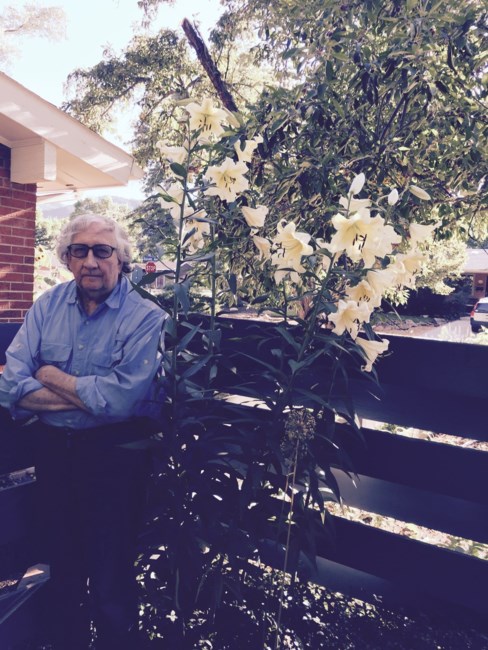
Ralph Emerson Mann II died on Monday, August 17, at his home in Boulder, Colorado. He is survived by his wife of 57 years, Nancy Dawson Mann, his son, David Nathaniel Mann, David’s wife, E Danielle Maglinte, and his daughter, Elizabeth Cornelia (Nelia) Mann. Ralph retired from the University of Colorado in 2013 as an associate professor of American history, after 42 years on the CU faculty.
Ralph always identified as a native of West Virginia, though his wartime birth (June 3, 1943) was actually in Texas. He remained in touch with his extended family in West Virginia, especially his cousins Lew and Mescal. He attended middle school and high school in Jacksonville, Florida, and likewise remained in touch with high school friends—Bill Bowman, Dobby Armayor Moller, Sherry Danyluck--throughout their lives; he was not the sort of man who ever forgot a friend.
As an undergraduate at Duke (BA 1965), he began (this was the Sputnik era) by attempting a degree in chemistry, but happily discovered before long that his true interests lay elsewhere. Under the mentorship of Ann Scott, he became a historian. After a summer of work in a civil rights project in Wilmington, NC, he left the east coast for graduate school at Stanford (MA 1966, PhD 1970), where he worked with Don Fehrenbacher and David Potter.
At Stanford, he lived first in a rundown World War II building whose residents—all male graduate students and undergraduate transfers, many of them engineers—knew that the building was slated for demolition at the end of the academic year, and treated their quarters accordingly, drilling holes through the walls to rewire electrical connections for elaborate pranks. Again, he made a circle of friends with whom he maintained contact throughout his life, including his closest friends, Boyd (Kix) Paulson and Bill Hill. He soon connected also with Kix’s exceptionally warm and generous family. He maintained a strong emotional loyalty to Stanford, serving after retirement as an alumnus interviewer for prospective students, and despite his maladroitness with technology even braving Zoom to continue this work during the pandemic. And, of course, he followed Duke basketball and Stanford and CU football. Stanford was also where he met Nancy. As a fourth-year graduate student, he couldn’t afford an engagement ring; instead, he gave her his Phi Beta Kappa key. The summer before his death he said that he’d made two good decisions in his life, one of which led to the other: Stanford, and Nancy.
After a year at the University of California San Diego, Ralph found a permanent home in 1971 in Boulder at CU where he made yet more close friends, especially Bill and Barbara Taylor, Bob and Anne-Marie Pois, Jim and Mary Ann Jankowski, and Fred and Virginia Anderson. He began as a specialist in the social history of the American West, publishing After the Gold Rush: Society in Grass Valley and Nevada City, California, 1849-1870 (title borrowed from Neil Young), and moved from there into U.S. social history more broadly, especially the mid and late nineteenth century. His social-work experience in Wilmington inspired him to think about how class, race, and ethnicity worked, especially in small communities. Combining his personal interests and background with his professional work, he ultimately settled in Appalachian history, authoring a number of articles and conference papers on, among other topics, the guerrilla warfare that tore apart mountain communities during the Civil War, and how those communities recovered during the decades after the war. He continued his scholarly work after his formal retirement in 2013 (witness the 56 books that remained checked out of CU’s Norlin Library at the time of his death).
Ralph was, before all else, a passionate teacher. At CU he was respected both as a large-lecture-course teacher and as a mentor working individually with both undergraduate and graduate students. For decades, he couldn’t go to any restaurant in Boulder without being accosted enthusiastically by former students. Even on hiking trails in western Colorado, his children were apt to hear “Professor Mann! You won’t remember me, but I took your U.S. history survey in 19XX . . . .” He advised or served on dissertation committees for dozens of MA and PhD students, many of whom perpetuated his influence in their own college and secondary teaching (BethAnn Berliner, Carol Byerly, Annie Gilbert Coleman, Chris Daniels, Diana DiStefano, John Enyeart, Betsy Glade, Eric Hinderaker, Walter Hixson, Rebecca Hunt, Shirl Kasper, Tom Krainz, Paul Langston, Todd Laugen, Linda Noel, Duke Richey, Eliakim Sibanda, Jim Walsh. . .). Graduate students, especially, appreciated his (literal) open door policy and his generosity with his time. His colleagues and department chairs knew he’d never turn down a grad student orphaned by a dissertation advisor’s departure for a competing university.
He regularly taught the lead, 200+-student section of History 1015, "History of the United States to 1865," as well as a small research seminar on the Civil War and social change (one of his favorites), upper-division lecture courses on American society in the nineteenth and twentieth centuries, and graduate courses focusing on the age of U.S. industrialization and the rise of capitalism. His annual ritual reading of “The Night Before Christmas” to his children included commentary recycled from a fall-semester course whose mid-December final lecture was organized around the social importance and evolution of the Santa Claus figure in American popular culture. His upper-division Civil War lecture was especially popular with students; graduate students sometimes commented that he seemed to have read every book ever published in that vast field.
His teaching was a model even for graduate students outside his own field, notably his TAs in the survey course, who marveled at his ability to lecture coherently on complex topics for 50 minutes without ever consulting his notes. They also appreciated his meetings with them, in which he encouraged them to “footnote the lecture”—that is, to analyze it historiographically, teasing out which facts and interpretations came from which books in the U.S. history literature. This turned what might have been drudgery into a significant part of their professional education.
CU recognized his teaching and advising with the College of Arts and Sciences Faculty Advising Award in 1984, the Outstanding Undergraduate Advisor award in 1989-90, and the Boulder Faculty Assembly Award for Excellence in Teaching and Pedagogy in 1988; in 2004 the History Department made him a Distinguished Teaching Professor. Other honors included a Certificate of Appreciation from Disability Services, and the Kayden Faculty Book Manuscript Award. But he kept his sense of proportion, even about teaching: after his death, working on the Augean task of sorting out his files, his family found the award letters in a folder labeled “University Bureaucracy.” And one year, when his department chair made the mistake of putting him in charge of the departmental graduation ceremony, he chose as the recessional music a disguised, instrumental version of Pink Floyd’s “We don’t need no education.”
Within the department, he was known for his collegiality, especially towards younger faculty. He read widely and never turned down a request for bibliographical help with preparing a new course or compiling a reading list. Among the comments his colleagues made at the news of his death, several mentioned his strong moral sense and honesty, his sense of humor, his welcome to newcomers, and, again, his kindness to students at all levels.
Ralph was fond of 1950s Americana, particularly classic cars and rock and roll. He geared up for beginning a new semester of teaching by listening to Buddy Holly’s “Not Fade Away,” with a particular emphasis on the line “I’m a-gonna tell you how it’s gonna be.” Recently, when he was encouraged to give up driving, he responded with a lecture on the significance of the automobile in American culture. An avid consumer of chocolate, he insisted that anything above a 70% cacao content qualified as medicine. Equally committed to microbrews, he explained that he wasn’t rich enough to become a wine snob, so he became a beer snob instead.
In later years, Ralph’s lifelong affinity with nature and wildlife took him in a new academic direction, environmental history, and finally allowed him to take Nancy along to a conference in a location more exotic than West Virginia: Australia (“Gender, Subsistence, and Large Scary Animals,” Minding Animals: International and Community Conference on Animals and Society, 2009). His library included several dozen specialized volumes on frontier agriculture, gathering (e.g., ginseng), and hunting; Appalachian trees; bears, white-tailed deer, mountain lions, etc. Some of his children’s favorite memories are of camping and hiking with him. He donated regularly to the World Wildlife Fund and the Audubon Society, maintained several bird feeders, and as a “citizen scientist” recorded and relayed information about the birds who visited them. Just a few hours before his sudden death, he was planning eagerly to do next season’s Cornell Lab of Ornithology FeederWatch remotely through his daughter’s bird camera in upstate New York, which offered close-ups of a much wider variety of birds than he’d see in Colorado.
Other favorite charities included the Colorado Music Festival and the Colorado Shakespeare Festival, the Civil War Preservation Trust, the Smithsonian Institution, and Doctors Without Borders.
A memorial gathering will be held on Thursday, September 3, 2026, at 5:30 pm in the Center for British and Irish Studies (room 549) on the fifth floor of Norlin Library (1720 Pleasant St., Boulder, CO 80309).
“And gladly wolde he lerne, and gladly teche.”
Show your support
Send Flowers
Add a Memory
Share Obituary
Get Reminders
Past Services
Ralph Emerson Mann II Memorial Gathering
- SEND FLOWERSSEND
FLOWERS SHARE OBITUARYSHARE
- GET REMINDERS
v.1.18.0