
OBITUARY
Bruce Rogers Joyce
March 16, 1930 – July 18, 2026
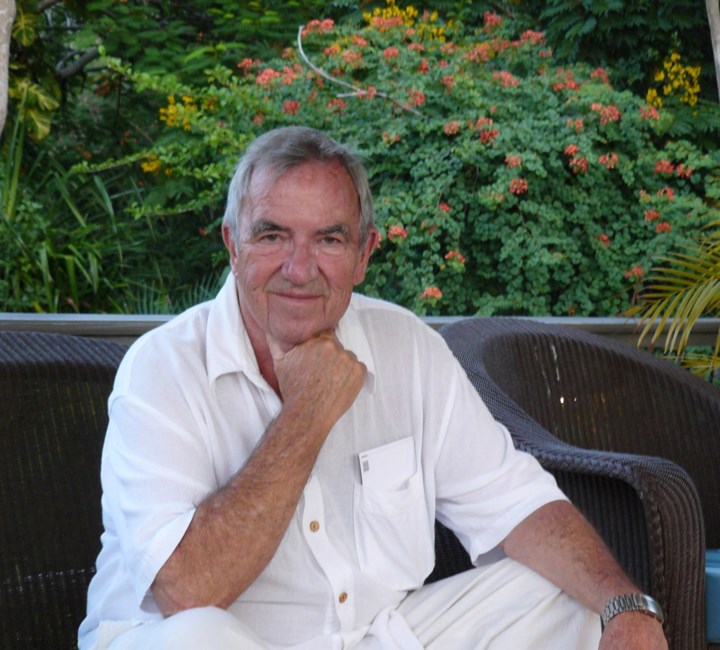
March 16, 1930 – July 18, 2026
Bruce Rogers Joyce, age 96, of Saint Simons Island, Georgia, passed away peacefully at his home on July 18, 2026. He was surrounded by love, with his wife and partner of over thirty years, Emily Calhoun, and cherished friends by his side. Bruce lived a long and consequential life, marked by intellectual curiosity and an enduring belief in education’s power to enlarge human possibility.
He was born in Baltimore, Maryland, the only child of Louis C. Joyce and Ursula (Read) Joyce and raised in Merchantville, New Jersey. Bruce earned his bachelor’s degree from Brown University. After serving in the military, he began his career as a teacher in the public schools of Delaware. He later continued his studies at Wayne State University, earning his Doctor of Education degree in 1960. His doctoral work, centered on pedagogy, educational philosophy, and the preparation of teachers, introduced questions that would guide the rest of his professional life: how people learn, how teachers develop their craft, and how educational ideas can be transformed into meaningful classroom practice.
Bruce held professorships at the University of Delaware, the University of Chicago, and Teachers College, Columbia University. He directed teacher-education programs and, at Teachers College, led the Agnes Russell School, the college’s laboratory school. Bruce served as the Executive Director of the Urban/Rural Leadership Training Institute (LTI) during the mid-to-late 1970s while affiliated with Stanford University and the Stanford Center for Research and Development in Teaching (SCRDT). He was also the primary investigator and the senior author, along with colleagues Robert N. Bush and Michael McKibbin, of the California School Improvement Study (1982), one of the most extensive investigations ever undertaken into how state and local school improvement efforts actually functioned and how changes could be made. Although his work was deeply grounded in research and theory, he remained focused on the practical work of teachers and schools. He believed educational ideas mattered most when they could be tested, refined, and brought to life in classrooms.
His career took him throughout the United States and around the world. Bruce served as a visiting scholar at institutions including the University of Hong Kong, the University of Toronto, and the Western Australian Institute of Technology. He was an all-India Fulbright Scholar and provided technical assistance to Egypt’s Ministry of Education. Through his teaching, research, writing, and consultation, he worked with educators in the United States, Asia, Europe, and elsewhere to strengthen teaching, professional development, literacy, and school improvement.
Bruce wrote or co-wrote numerous books on teaching, teacher education, professional learning, and school renewal. He was best known for Models of Teaching. Published across many editions and used by educators internationally, the book gave teachers a practical framework for understanding and selecting from a broad range of approaches to instruction.
Rather than promoting a single prescribed method, Bruce encouraged teachers to develop a rich and flexible professional repertoire. His work explored behavioral, information-processing, personal, and social approaches to teaching, helping educators match their methods to their students and their purposes. He also wrote extensively about staff development, inductive learning, social studies education, literacy, and the continuing renewal of schools.
Throughout his career, Bruce returned to a central conviction: educators must themselves remain learners. He believed that teachers could continue to develop throughout their working lives and that schools could become communities in which adults and children alike expanded their capacities. The reach of that belief can be found in the generations of teachers, professors, school leaders, and students influenced by his work.
Yet no list of publications or academic appointments can fully describe the man his family knew. To his children, he was simply Dad. They knew the person behind the books and professional titles, and their memories of his conversations, habits, ideas, and distinctive way of seeing the world form a legacy no professional biography could capture.
Bruce is survived by his wife Emily; children Cynthia, Elisabeth, Brendan, and Seamus; sons-in-law Andrew and James; daughters-in-law Maria and Haley; four grandchildren; three great-grandchildren; four granddogs; one great-granddog; and four great-grandcats. He was preceded in death by his son Kevin.
Animals were a cherished part of Bruce’s family life, bringing companionship, affection, comfort, and humor. Among those especially close to him were Harlequin and Mocha, the beloved cats Bruce shared with Emily.
His smile, his joy in story-telling and interacting with friends and audiences whether face-to-face or online, his sense of adventure, his love of music, and the pleasure he took and gave when singing and playing the piano will be sorely missed by many.
The family is deeply grateful for the many friends and neighbors who provided support during these difficult times: providing meals, physical labor, home repairs, cat tending, emotional support, and companionship. Their loving and kind support enabled Bruce to spend his final fifteen months at home.
Bruce Joyce devoted his life to learning—not merely as an academic pursuit, but as a means of helping people grow. His ideas will continue wherever teachers search for better ways to reach their students. His more personal legacy will endure in the family, friends, colleagues, educators, and beloved animals who shared his life.
Show your support
Send Flowers
Add a Memory
Share Obituary
Get Reminders
Services
- SEND FLOWERSSEND
FLOWERS SHARE OBITUARYSHARE
- GET REMINDERS
v.1.18.1