
OBITUARY
Russell Sheldon Newman
January 28, 1934 – May 18, 2021
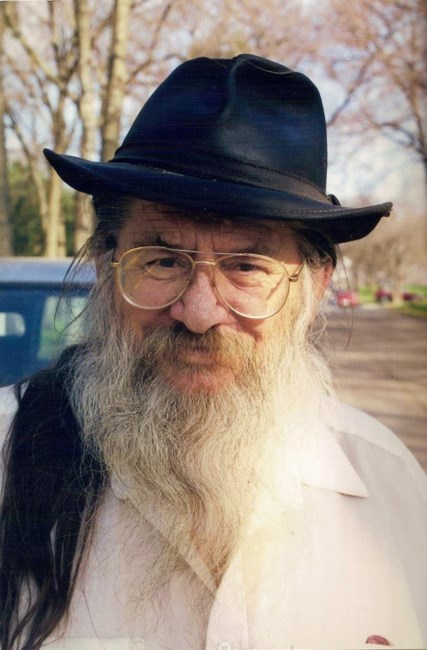
R. Sheldon Newman lived a full life of learning and advocacy for causes he felt could change the world for the better.
Sheldon, who died May 18 at age 87, made his mark most notably on his adopted hometown of Denton, Texas, where he was an integral part of the emerging counterculture in the 1960s and 1970s, and helped build a community around Fry Street.
He was born January 28, 1934 in Randolph, Vermont. Memories he recalled from his small-town New England childhood included harsh, unforgiving winters – and pure maple syrup straight from the tap in the trees around his home. After high school, he grew more involved in the Congregationalist church and considered entering the ministry – an interest in spirituality that would remain throughout his life.
Sheldon ultimately enlisted in the U.S. Air Force at age 19, near the end of the Korean War, and began training as a radio operator. He spent eight years in the service, during which time he was stationed in several different countries; he spoke most fondly of his time in Morocco.
After he completed his service, Sheldon returned home and hitchhiked across the country, eventually visiting all 48 contiguous states. He spent time studying at Idaho State University in Pocatello, then headed south to enroll in North Texas State University’s library sciences program.
It was during this time – the mid-1960s - that he became more active in peace-related causes. He was elected president of the NTSU chapter of Students for a Democratic Society and led protests against the nascent Vietnam War and escalation of military weapons, including the Nike missile silo north of Denton.
Sheldon supported himself by working as a day laborer in an automobile parts yard. The experience led him to think more deeply about the sufferings of individuals on the margins of society. He drew inspiration from the Catholic Worker, an organization founded by Dorothy Day during the Depression to advocate for social justice. After experiencing an epiphany to live life “as God made him,” he grew out his hair and his beard, which he kept the rest of his life. He built a group of like-minded individuals who all lived around Fry Street, which became known as “The Family.” He spoke often of the "Church of Changes," a church with no building, no rules, no dogma and no clergy, but a common liturgy and desire to help others.
Sheldon established the Family Feed Store, an organic grains and vegetables co-op. There was no cashier; customers just left whatever money they could. One friend recalled, “He fed us when we were hungry.”
He wrote a semi-regular newsletter, Teski Zeiti (roughly translated from German as “Times are Bad”), which chronicled his community’s protests of what was happening in the world, and is included in the Free Speech Movement Papers collection at the University of California at Berkeley. He also wrote a play chronicling the plight of marijuana smugglers.
In the early 1970s, he and his former wife, Julie, opened Earthware, a secondhand clothing store that became a go-to spot for college students and others in the community. Visitors to the store at 114 Fry Street remembered Sheldon sitting in a rocking chair and smoking his pipe while the couple’s young daughters played nearby.
Sheldon later worked for nearly two decades as a supervisor in the facilities department at the University of North Texas, a post he held until he retired in 1997. He moved to a quiet, rural street in Shady Shores, just a block north of Lake Lewisville, and lived out his life on his own terms. He enjoyed a community of kind neighbors who took care of each other and went for many long strolls with his walking stick and trademark hat in the natural areas around his home, saying retirement was the best job he ever had.
His greatest loves in life were his daughters, baseball, jazz, a good pipe, and the mountains of books piled up around his house; he always kept some in the back seat of his car so he’d never be without something to read. He was proud of the fact he got to see some of his musical heroes in concert earlier in his life, including Miles Davis and Billie Holiday; one of his chief regrets was never seeing Ella Fitzgerald perform. He never stopped learning and engaging even in his later years, whether it was figuring out how to build a Linux-based computer or debating the politics of the day.
Dentonites may have encountered Sheldon sitting and reading a book at The Cupboard natural foods store or Recycled Books and Records – or, later, at McKenna Park while watching his grandsons play on the playground. He delighted in taking them to Recycled every Christmas, just as he did with his own daughters, to pick out a stack of books as their gifts. He was even featured in a mural that graced the exterior wall of Jim’s Diner on Fry Street for many years.
As friend Joe Benenate put it, “Sheldon was a working man who gave all he had.”
He is survived by his daughters Anna Newman and Emily Newman Melson, Emily’s husband Alan Melson, beloved grandsons Jack and Colin Melson and former wife Julie Newman. No service is planned, but his ashes will be scattered at his favorite campsite in the Carson National Forest outside Taos, New Mexico, where he spent many summers camping.
Donations in his memory can be made to Serve Denton at servedenton.org/donate.
Show your support
Add a Memory
Share Obituary
Get Reminders
Services
SHARE OBITUARYSHARE
- GET REMINDERS
v.1.18.0