OBITUARY
Henry Louis Chauvin
May 25, 1942 – October 7, 2026
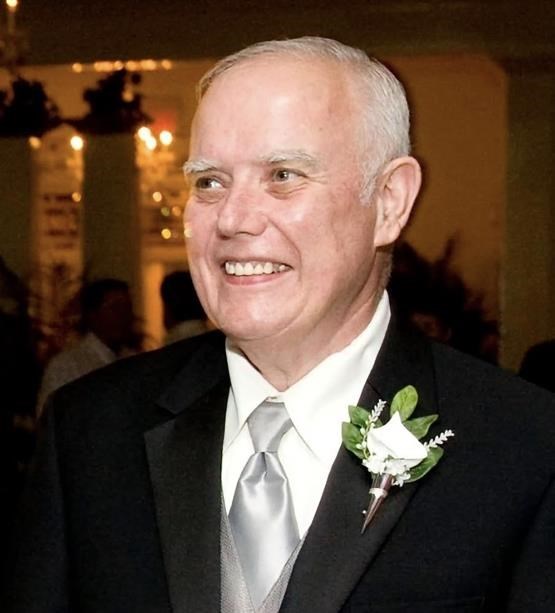
Henry Louis Chauvin, 84, architect, Army officer, musician, craftsman, husband, father, grandfather, and friend, of Union, died Wednesday, October 7, 2026, at 7:00 a.m. at The Crossing at Clarity Hospice in Baton Rouge. He was born May 25, 1942, in New Orleans to Charles Francis Chauvin Sr. and Cecile Tregre Chauvin. He married the love of his life, Carol Leigh Wood, in August of 1972.
There were very few things he could not do, and fewer still that he was unwilling to learn. He was an architect and a retired Army lieutenant colonel, and also a musician, artist, mechanic, surveyor, craftsman, and boat designer and builder. By the age of eight, he could play at least seven instruments. He later built instruments, drew and painted, repaired engines and firearms, surveyed land, and designed and constructed boats. He had the mind of an architect, the hands of a craftsman, and the curiosity of an inventor. He was rarely satisfied knowing that something worked. He wanted to know why it worked, how it was made, how it might fail, and how it could be made better.
His education in building began before college. In the summers, he worked beside his uncle and parrain, Francis Chauvin, framing and finishing houses, and at the Blue Runner Canning factory with uncle Pete Chauvin. After high school, he spent summers with his older cousin, Emile Chauvin, a Designer and builder from Union. Emile had little formal schooling and a great deal of practical knowledge. Henry later said he learned more working beside Emile than he learned in architecture school: materials, workmanship, and the fact that a drawing eventually had to become something that could be built. He graduated from Catholic High School in 1960 and from Louisiana State University in 1966 with a bachelor’s degree in architecture. He often recalled that 109 students entered the program with his class and six graduated. He then took a position with Smith, Hinchman & Grylls in Detroit. In the few months before he entered the Army, he was entrusted with the design of a fourteen-story dental research tower in Louisville.
Knowing he would be drafted, he applied for Engineer Officer Candidate School and entered the Army in October 1966 at Fort Wayne, Detroit, Michigan. He completed basic and combat engineer training at Fort Leonard Wood, Missouri, and graduated from Engineer Officer Candidate School at Fort Belvoir, Virginia, in August 1967. He was a Command and General Staff College graduate from Fort Leavenworth, KS. Commissioned in the Corps of Engineers, he first served at Fort Polk, where he trained thousands of soldiers preparing for duty. In August 1968, he was ordered to Vietnam. As a first lieutenant, he spent the next year at Moc Hoa, in Kien Tuong Province near the Cambodian border, as an engineer advisor with Military Assistance Command, Vietnam, operating from Special Forces Camp B-41. He worked with South Vietnamese soldiers, civilian engineers, and public works officials on roads, bridges, and water systems. His Bronze Star citation credited his work on the provincial capital’s water system and on road and bridge construction. The province separately honored him for his help with its public works and rural development.
One tool he carried into that assignment was not military equipment. It was French. It was his parents’ first language, and he then studied it in Catholic school and in literature courses at LSU. In the Mekong Delta, where many educated officials still spoke French, he used it every day. He later said that being able to speak their language had saved his life more than once. He returned from Vietnam in August 1969.
He entered the Army Reserve in 1970 and served more than a quarter century in command, engineering, and staff assignments. He commanded soldiers, served in engineering and maintenance operations, trained in the United States and overseas, and served in Europe and Egypt. His decorations included the Bronze Star Medal, three Army Commendation Medals, the National Defense Service Medal, the Vietnam Service Medal, the Republic of Vietnam Campaign Medal, the Armed Forces Reserve Medal, the Army Reserve Components Achievement Medal, and other commendations. After nearly thirty years of active and Reserve service, he was placed on the retired list as a lieutenant colonel in 2002.
He received his Louisiana architectural license in 1970 and joined Nolan, Norman & Nolan in New Orleans, in a period when the city was building some of its major modern works. Among them was the Louisiana Superdome. When the planned precast-concrete exterior proved too heavy for the foundation and soil, the enclosure was redesigned in a lighter metal system. Henry designed the exterior metal-panel wall system, using Inland Ryerson panels in a layered vertical and horizontal arrangement. He kept copies of original Superdome drawings bearing his initials for the rest of his life. His other New Orleans work included Hotel Dieu Hospital, additions to Mercy Hospital and Children’s Hospital, D.H. Holmes at Lakeside and Lake Forest, the correctional facility at St. Gabriel, and other commercial and civic projects.
He was a member of the American Institute of Architects, Reserve Officer’s Association, President of Ascension Parish Residential Board for 25 years, Council on Aging Board for 6 years, and past Ascension Parish Government & School Board Architect.
He was the kind of architect who cared about how the taxpayer would want the building built: efficient, safe, and sound. He never had any interest in showboating a design. For much of the 1970s, he was his firm’s principal specification writer, one of the early Certified Construction Specifiers in Louisiana, and a six-year board of directors’ member of the New Orleans chapter of the Construction Specifications Institute (CSI). In 1976, the Institute gave his specifications for the 2nd District Police Station a Region 4 Merit Award. His involvement with CSI spanned about fifty years.
He and Leigh raised four children: Spencer, Marc, Ashley, and Ryan. In 1979, they moved the family to the Gonzales area, where he opened his own practice and remained an independent architect for more than forty years, designing buildings across South Louisiana. He and Leigh shared nearly fifty years of marriage before her death from cancer on October 24, 2022. He often called her death one of the great losses of his life.
He was preceded in death by his parents, Charles Francis Chauvin Sr. and Cecile Tregre Chauvin, and by his wife, Carol Leigh Wood Chauvin.
He is survived by his brother, Frank Chauvin (Louise); his children, Spencer Louis Chauvin (Chantel), of Union, Marc Francis Chauvin (Mindy), of Kentwood, Ashley Elizabeth Chauvin of New Orleans, and Ryan Charles Chauvin (Carmen), of Baton Rouge; six grandchildren, Kailey Louise Chauvin, Macy Francis Chauvin, Luke William Chauvin, Chloe Marie Chauvin, Avery Maurie Chauvin, and Emily Jane Chauvin; and a host of nieces, nephews, and friends.
Visitation will be Wednesday, October 14, 2026, from 5:00 to 8:00 p.m. at Ourso Funeral Home, 134 Houmas Street, Donaldsonville. Visitation will continue Thursday, October 15, from 9:00 a.m. until the 11:30 a.m. funeral Mass at Ascension of Our Lord Catholic Church, 716 Mississippi Street, Donaldsonville. Christian burial will follow at St. Mary’s Chapel Cemetery, 10120 LA-44, Convent, beside his wife.
Pallbearers will be Spencer Chauvin, Marc Chauvin, Ryan Chauvin, Luke Chauvin, Charles “Chuck” Chauvin, and Robby Bergeron. Honorary pallbearers will be Frank Chauvin, Donald Bergeron, Steve Chauvin, James Hymel III, Vince Cataldo, and Dr. John Fraiche.
In lieu of flowers, donations may be made to Friends of St. Mary’s Chapel.
Show your support
Add a Memory
Share Obituary
Get Reminders
Services
Visitation
Share
Service
Visitation
Share
Service
A Mass of Christian Burial
Share
Service
SHARE OBITUARYSHARE
- GET REMINDERS
v.1.18.0