OBITUARY
Noel Joseph Thomas
December 21, 1933 – March 15, 2026
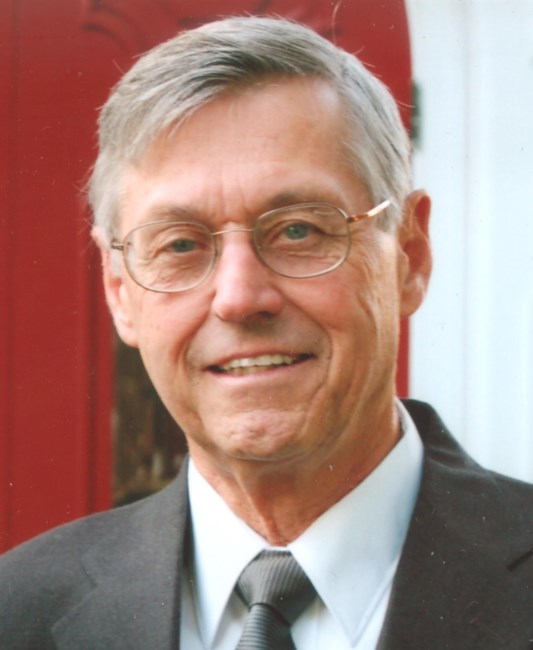
Noel Joseph Thomas was born on December 21, 1933 in Wellsville, New York to William Henry Thomas (1895-1978) and Mary Elizabeth Fink (1901-1974). The family originated outside Gettysburg, Pennsylvania where their roots run deep into the 1700s among the earliest German and French Catholic settlers of the region. Their Catholic identity was strong and over the years a number of men and women from the extended family entered the Church. Noel’s uncle, the Very Reverend Ruellen P. Fink, was a leader in the Augustinian Order; his brother Basil was an Augustinian Brother.
Noel grew up with three older siblings: William R. Thomas (1926-2020), Basil F. Thomas (1927-1983) and Helen Thomas Egner (1930-2014). Their father was a house painter and skilled craftsman who repaired antique furniture for clients across New York. As a boy, Noel acquired his father’s comfort with tools and love of the outdoors; they hunted and fished together as a family, putting food on the table in hard times. Noel graduated from Wellsville High School in 1951 and took his skills in mathematics and science to Clarkson University in Potsdam. Not being able to afford a car, he would often hitchhike the 250 miles home across the North Country, even in winter. Thus began his lifelong love of travel.
Graduating in 1955 with a degree in Civil Engineering, Noel worked on projects connected with the St. Lawrence Seaway and Chesapeake Bay Bridge, among others around the country. By 1957, Noel had joined the Army and was stationed at the Presidio in San Francisco where he trained as a forward observer for artillery, but was assigned for much of his stint to mapping expeditions in the remote White Mountains along the California-Nevada border.
After returning to the Presidio, Noel met and quickly fell in love with Patricia Ellen Kappel, a young Registered Nurse at St. Mary’s Hospital. The couple who introduced them, Dr. Sandro and Mary Sandri, became lifelong friends. In later years, Noel and Pat would talk fondly of those early days in San Francisco, reminiscing about sourdough bread, seafood at the “real” Fisherman’s Wharf, and the folk music clubs of the day. They married on June 4, 1960 and soon had their first child. Looking ahead at future career prospects, Noel entered graduate school as a full time student at Stanford University, often studying and solving problems with a baby in his lap, as Pat worked night shifts to support the new family. He graduated from Stanford with a Masters in Engineering and the family soon relocated to Signal Mountain, Tennessee following a job offer from the Dupont Corporation.
Together, on Signal Mountain, Noel and Pat created a rich and nurturing life that sustains their children still. Family and faith were always at the center of their world. Having once made the mountain their home, Noel later turned down several opportunities for advancement that would have meant uprooting the family. As early members of the local Catholic community, they were active in the parish even before the church itself existed and raised their children to pursue moral and spiritual lives with compassion for others. Noel served on the parish council and was a key engineering and planning advisor to the parish throughout the process of building St. Augustine church.
Noel and Pat valued education highly, encouraging their children to enjoy learning for its own sake and to pursue that learning wherever it might lead. Both loved to read and discuss, and passed these traits on to the family. Noel also passed on his love of travel; whether taking a Sunday drive to a local waterfall or crisscrossing the country in search of National Parks to explore, he always stopped for scenic overlooks and historical markers, teaching the importance of recognizing both the natural beauty and the human story of the landscape. Noel also enjoyed gardening and was an early advocate of landscaping with indigenous plants and creating large natural areas rather than the stereotypical suburban lawn. He designed the family house, maintaining native woodland around it, and over the years built his own additions such as the decorative brick patio enjoyed by the family all summer long.
Professionally, Noel worked at the Dupont plant in Chattanooga for some 20 years. During this time he was also active in the local Society of Civil Engineers, serving as vice-president, then president for a time, and helped to bring the Apollo 17 astronauts for a speaking tour to Chattanooga. He was an active member of the Chattanooga Engineering Task Force advisory team which he chaired in the mid-1970s, and did pro bono engineering design work for the town of Signal Mountain.
Eventually, in 1983, Noel was transferred by Dupont to Charlotte, North Carolina, where he served as engineering project manager overseeing several facilities across the Southeast. After retirement, he worked as a consulting professional engineer with Performance Engineering of Pineville, NC. In Charlotte, Noel and Pat continued to garden, play bridge, travel, and make new friends, but their favorite pastime was still sitting in the patio, surrounded by flowers, visiting with family, friends, and neighbors, sharing stories, and keeping up on the adventures of their children and grandchildren.
In his final years, after the loss of his loving wife of 59 years, Noel returned home to Signal Mountain and passed away at Alexian Village on March 15, 2026. He is survived by their four children with their spouses and families: Michael and Lauren (Bailey); Michelle and Brian (Burns); Mary and Don (Breece) with their children Lindsay, Rachel and Drew, and grandchildren; and Mark and Jaime with their sons and daughters-in-law Matthew and Isha (Deo), and Aaron and Kelsie. Noel kept close ties with Peter Thomas, son of his brother Bill Thomas and wife Ann, as well as Dewey and Sara Thompson, two of his oldest friends in the Chattanooga area.
A funeral Mass will be celebrated at St. Augustine Catholic Church, 1716 Anderson Pike, Signal Mountain, Tennessee at 11:00 AM on April 24, 2026, followed by an internment ceremony. Visitation will begin at 10:00 AM. In lieu of flowers, donations may be sent to Habitat for Humanity or St. Jude Children’s Research Hospital.
Arrangements are by the North Chapel of Chattanooga Funeral Home, Crematory, and Florist, 5401 Highway 153, Hixson, TN 37343.
Please share your thoughts and memories at www.chattanooganorthchapel.com
Words of Remembrance by Michael Thomas
Noel Joseph Thomas, our father, was born on December 21, 1933, in Wellsville, New York to William Henry Thomas, a house painter, and Mary Elizabeth Fink, a homemaker. He grew up in that small-town, working-class family with three siblings, worked hard at school, graduated from Clarkson College as a professional engineer, entered the army, fell in love with Patricia Ellen Kappel, our mother, married, started a family, earned a Masters in Engineering, took a job with Dupont, moved to Signal Mountain, built a home and raised four children. Those are the facts.
But when I try to capture something of what his life meant, I’m struck by the irony of putting into words the life of a man who always said he felt ill at ease with language and writing. Dad was always much more about doing, than talking. He once told me that the hardest part of his job, the one obstacle he felt to career advancement, was whenever he had to put something down in words. And, to be honest, that’s what I’m feeling right now.
So, I’d like to share some of Dad’s own words with you. In the mid-seventies, as an engineer active in local professional groups, Dad was asked to give the keynote speech at a meeting of the Chattanooga Engineers Club. I was a teen, and remember this vaguely, how nervous he was, how he asked Mom to go over the speech with him ahead of time. I didn’t recall that the Chattanooga Free Press reported on the event and quoted him at length. Here, he is describing the typical engineer, but he might as well have been describing himself: “In reality,” he said, engineers are “basically conservative people who deal with facts and who seem to have less of a tendency to be outspoken. We don't work in an outgoing manner, but that's not to say our contributions aren't felt.”
Those lines capture so much of Dad; he was always more comfortable with facts, than with self-expression. For Dad, the world was meant to be studied, distances measured, objects weighed, problems to be solved. An engineer works with hard reality. Dad could reshape a manufacturing process, lay out the plans for a new patio or a new house, track his finances in extraordinary detail, and help all of us learn to make hard decisions by putting down the pros and cons in a well-organized T chart. Dad loved to solve Sudoku puzzles and play the numbers in a family round of Rummikub; right up to the very end, he could still beat us all.
To be sure, sometimes this engineering mindset could get in the way. I once heard him say to Mom, when she was struggling to put her feelings about a big decision into words, “I need data, Patty, I need data.” That remark did not help the situation. Or the time when his gall bladder nearly exploded, and what the doctors declared must have been excruciating pain was described by Dad, pacing back and forth in the kitchen, quite objectively as simply “a pain in my belly.” Only when we suggested, half-seriously, a trip to the emergency room, and he agreed, did we understand just what he was going through.
Of course, Dad wasn’t just about facts and data. He had a playful, even silly side he only showed when very happy and relaxed, especially when his children and grandchildren were coming home. He could dance a little jig of excitement for one of Mom’s cheesecakes; he could tease and taunt during a board game, he loved to play with dogs, and he would always get down on the carpet to play with his grandsons. He had an artistic side in his photography and gardening; he had a spiritual side in his commitment to the church and his reflections on faith.
Engineers, according to Dad, are people “who deal with facts and who seem to have less of a tendency to be outspoken.” But there’s more to that quote, just like there was more to Dad: “We don't work in an outgoing manner,” he said, “but that's not to say our contributions aren't felt.”
He might not have always been able to put his thoughts and feelings into words, but he put them into action. More about doing, than about talking. “Love,” he once explained to me in a reflective moment, “love is an action, not just a feeling.” He showed his love in how he provided for us, in the home he built for us with Mom, in supporting our education, in taking us on adventures to Cumberland State Park or back to Wellsville or out to Death Valley or Rocky Mountain National Park. He showed his love in guiding us with advice about career or problems with our car, in driving us to innumerable softball games and Scout meetings and birthday parties. He showed his love when he taught generosity and compassion for others by example. At a time, when racial and religious bigotry were commonplace in our community, he treated every person with respect, and if friends or neighbors used the violent, ugly language of the day for people they saw as “different,” Dad made it clear that such words and thoughts had no place in our family. He showed his love by encouraging us to always ask questions, making it safe to ask even the hard questions, about faith or politics. Even when we disagreed, even when our paths and choices confused him, or shocked him, or angered him, he stayed more even-keeled, more open to listening than most men I have known. He listened, and over the years, even softened or adjusted some of his own beliefs in light of what his children could teach him. So, once again, he gave us a model of learning and commitment to growth.
“We don't work in an outgoing manner,” he said, “but that's not to say our contributions aren't felt.” And that’s what I want to focus on: his contributions and how much they are felt even now by all of us. So many people over the years have told me how much they respected Dad, how much they learned from him, how much he gave them. When I look at myself, so much of what I am, so much of what is good in me, has come from Dad. And I see the same in each of us, each of his four children.
Each of us shares his love of data and numbers, and our career choices reflect that in one way or another.
Each of us is, like Dad, a planner, a builder, an architect in our approach to work and to projects.
Each of us loves to travel, to meet the world, like him, with curiosity, rather than fear or judgement.
Each of us finds beauty and adventure in the natural world. When we stop to appreciate a mountain view or hike to a waterfall, we’re following him.
Each of us loves to garden, to cultivate and beautify the world around us, just as he did in our backyard.
Each of us loves to learn and to grow, as he did his whole life.
All of this in us, and more, came from Dad.
I want to end with just a few more words that Dad himself chose. In his high school yearbook from 1950, Dad picked for his senior quote a saying from Gaius Julius Phaedrus, a Roman writer from the 1st-century AD. I have no idea how Dad came to learn of Phaedrus, but the quotation strikes me as a remarkable choice for him to have made at that age: “A learned man has always riches in himself."
I just recently discovered this quote. Looking back now, I can see that already as an eighteen-year-old young man, Dad had established the core values that would guide his entire life: “A learned man has always riches in himself." Not our material goods, not our objective achievements, not the things we own or the places we go, but more subtle riches harder to express for lying deepest inside, best shown in action. To use our learning to build something of quality inside ourselves, to build ourselves into the kind of people who engage deeply, richly, generously with the world and with others.
That, I suppose, is the greatest work of human engineering we can imagine.
“We don't work in an outgoing manner,” Dad said, “but that's not to say our contributions aren't felt.” Truly his contributions to our lives have been felt. And that’s because of the riches cultivated inside, inside of him, and now, I hope, inside of ourselves.
Show your support
Add a Memory
Share Obituary
Get Reminders
Services
SHARE OBITUARYSHARE
- GET REMINDERS
v.1.18.0