OBITUARY
David Wayne Sanderson
June 29, 1960 – June 6, 2024
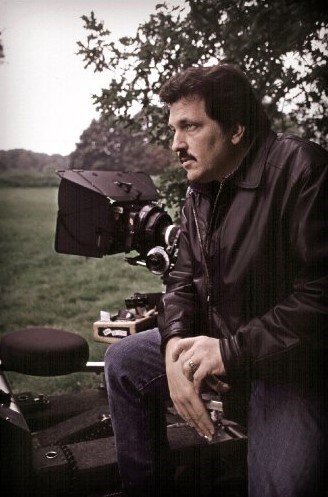
David Wayne Sanderson, 63, loved Las Vegas. He grew up in the back seat of his parents’ car rolling under Mojave starlight into the neon. He delighted in every movie produced in or about Sin City, especially Last Vegas (2013) and The Hangover (2009), but the reason he loved Vegas had more to do with grit than glamor. He loved Vegas for being a city of workers who came from somewhere else – different countries, different states, different traumas. David loved the resilience of the people of Las Vegas. David stole a lyric from Johnny Cash to apply to his workplace: some workers caved under the pressure of the movie business after a week or two, but others persevered through “the mud and the blood and the beer” and survived the harsh conditions of the industry. Vegas was full of people who’d been through “the mud and the blood and the beer” of the world, survived, and created new lives.
David passed away on June 6, 2024, in his adopted home city of Las Vegas. He passed away at Spring Valley Hospital following a sudden cardiac arrest.
David was born June 29, 1960 in Northridge, California to the working class families of Dusky Wayne Sanderson and Carol Louise Aliano. He went to James Monroe High School in North Hills, Los Angeles, where he wrote articles critiquing administrators and satirizing debates between Ford and Carter for the school paper. Orange groves still nourished the Valley. Sometimes, David lived in his mom’s apartment where Italian spilled out of the doorway with the smell of enough spaghetti to feed twelve children, including David in the closet with the flashlight trying to do homework. Other times, he woke up to “Monday, Monday” by the Mamas and the Papas at his dad’s bachelor pad or said “sir” at the Sanderson dinner table in Oklahoma or deep East Texas, where family drawled out their syllables far more than back in California.
David spent childhood summers in the desert at the Del Rhea Lodge in Needles, California, along the Colorado River near the Chemehuevi Indian Reservation. He was working a month-long stint at the town pizza parlor when he found out from his aunt that a movie had come to town. He hit Route 66 in his ‘68 Chevy Impala and never looked back, sleeping with the equipment in the camera truck to stay on the job, starting with his first movie: Convoy (1979). That was the week Elvis died. He trucked up and down highways on location in New Mexico, long days and nights on the road with people like Kris Kristofferson and western movie legend Sam Peckinpah.
David built a career out of film because he deeply loved movies. He fell in love with movies as a kid with his dad and uncle, but once he got back to Los Angeles after Convoy and a few subsequent jobs like Cloud Dancer (1980), he was hooked. He became a rank-and-file member of the Screen Extras Guild and the Screen Actors’ Guild (SAG) that later absorbed the extras’ union, working gig after gig after gig, including renowned movies like Reds (1981), Little House on the Prairie (1980), and Rocky 3 (1983). He managed to jump through enough calls and throw together enough small jobs that when he enrolled in community film classes at the University of California, Los Angeles (UCLA), the film professor asked David if he could help get the professor a job. David walked out of class and never went back.
He dismissed formal classes entirely and self-studied film history in Hollywood, particularly Italian film by directors like Federico Fellini, then took a pay cut to work at the Victor Duncan camera rental house to master the technical side of camera. He became a bit of a legendary focus puller on productions like Dances with Wolves (1990). He developed his own number measurements to seamlessly pull focus for the best shot and developed a risky but innovative camera box called the “buffalo camera” to capture the best shot of buffalo stampeding across the Great Plains. He worked his way up on the internationally-renowned Dallas, rising from Patrick Duffy stand-in to assistant cameraman. He worked on production after production in deep closeness to his mentor, friend, son of early Hollywood labor leader and Script Clerks Guild founder Thelma Preece, and legendary filmmaker Michael Preece. Michael taught David how to be a filmmaker, but also how to be a leader – according to David himself. David rose with Michael as camera operator on Chuck Norris action sensations like Walker, Texas Ranger that propelled them through the Nineties.
David didn’t like the technical end of the camera nearly as much as the creative end. Dad was a storyteller, both behind a camera and in conversation. He saw the world in movies, in plots and characters, experiences captured in imagined shots and scenes. His friends all knew him for tales told best over cold glasses of beer. With a twinkle in his eye, he spun audiences in webs of historical events tied to personal anecdotes knotted with crescendo and punchline. He’d been collecting stories since he was a kid. He could take you at whim on a journey with him to Mount St. Helens’ 1980 eruption or the moment when Priscilla Presley flirted with him with a toothpick. David could take you to the U.S.-Mexico border movie set left for the weekend in his care with nothing but a shotgun and a three-legged bulldog. He could introduce you to Olivia Newton John, one of the sweetest people on the set of the southern queer Sordid Lives: The Series (2008), or to Patrick Duffy on the Southfork Ranch set of Dallas jokingly referring to his stand-in David as “his son,” or to Russell Means, the Oglala Lakota community leader and Red Power activist that David spent many nights talking to at downtown Asheville bars after wrap on Last of the Mohicans (1992).
You could tear off your tie and stomp off with him out of one of Hollywood’s most exclusive clubs to meet his future life partner Collene at a down-to-earth L.A. honky tonk: the Longhorn Saloon. The decision to leave that Hollywood club was the moment he decided he was done with the rich. He may have had to smile at the rich in the film business, as he had to later when he entertained German nobility and Italian godfathers and the Swarovski diamond family, but he didn’t want to let their culture take over the rest of his life. David and Collene spent forty-two years as partners, building a life in Texas together, two-stepping in cowboy boots and ten-gallon hats that ensured they never belonged in elite Hollywood. Outlaw country was a rebellion against conservative values, a counterculture that gave them a soundtrack to break free from the patterns of childhood and generational trauma. They embedded themselves in the outlaw scene. They knew its voices and its personalities, listening to everyone from Willie Nelson to Robert Earl Keen to Billy Joe Shaver, and chose an outlaw style of marriage by eschewing a traditional big Hollywood ceremony in favor of a small one at a tiny chapel above Hippie Hollow on Lake Travis. They named their son after that lake near Austin.
You could bar hop through David’s stories. He could bring you to the White Elephant Saloon in Fort Worth, where he proposed to Collene, just as soon as the Longhorn Saloon where he met her. He could bring you to the bar in Asheville or to the Hong Kong Bar in Munich or to that random Texas bar, seating you next to a bunch of arrogant British pricks boasting about their drinking prowess, to see David trick them into embarrassing themselves by drinking too much because “in Texas, we drink Texas tea like water.” The Brits showed up the next morning so hungover that it cost the production a day of work and earned the workers, including David, a paid vacation day. He could bring you to the Leibniz Bar, in a west Berlin still deeply traumatized by the last century, which U.S. veterans opened and where David spent many nights with Collene raising their son Travis. Finally, you could walk with him to the Billy’s Bones Irish Pub around the corner from 17 Berggasse next to Sigmund Freud’s address in Vienna, where David lived longest in his entire life – fifteen whole years.
David knew Vienna better than most Viennese people knew Vienna. This is no exaggeration; multiple times, David would brainstorm locations that local location scouts didn’t even know and ended up chosen for pivotal scenes. David knew every nook and cranny of the City of Dreams because, for the last fifteen years of his life, he was dedicated to the Austrian crime series SOKO Donau (2005-). The show was based out of Vienna. He had made a name for himself in Austria earlier on Schlosshotel Orth (1996-2004), a show that brought international fame to the small ceramic-producing Alpine town of Gmunden, which still proudly displays a sign showing off the show. He was known for that success when he arrived in Vienna on the invitation of producers following the 2008 market crash. Once he took over the crew on SOKO Donau, David’s tenure on the show outlasted every director and producer. He transformed the show from old-fashioned serial to an innovative work of entertainment. The dedicated audience got younger and increased by the millions in the German-speaking world. The show got renewed over and over again. Through its success, David’s work on SOKO Donau kept the jobs of dozens of workers secure for more than a decade. He formed some of his closest friendships from the hundreds of lives he touched in the Austrian film industry.
In camera, David’s career was expansive. Soaring westerns, Victorian romances, gritty cop shows, Alpine Heimatfilme, Southern queer indie cult comedies – every movie reached the masses in the millions. David ran crews of forty to fifty workers coordinating every single detail of every shot to deliver emotional impact, to bubble up laughter, to build anticipation. Lights, camera, action. Lamp position, length of time spent on someone’s face, the contrast and chiaroscuro. Each cinematic detail is the product of dozens of organized workers in sync collectively telling stories for the masses together. But keeping in the spirit of his practical nature, David firmly believed movies were made to entertain. Everything besides entertainment was secondary. He couldn’t resist pointing out every boring or predictable point, every over-stylized frame, every obvious lighting mistake, and groan at any hint of a navel-gazing intellectual from film school who had no experience in the “mud and the blood and the beer” making convoluted and cerebral statements about nothing. Watching a movie with him always included his commentary.
Like Anthony Bourdain, whose writing resonated with David as a fellow worker-turned-world traveler, David always knew whose side he was on. He did not grow up with much; once, as a teenager, he bit into an artichoke provided by a rich person at a rich party because no one told him how to eat one. He was a bleeding heart liberal in the style of Ann Richards and Jim Hightower. Like them, he could eviscerate a right-wing talking point with a sharp witticism delivered with a smile. Beyond his membership in the Screen Actors’ Guild (SAG), David was an active rank-and-file member of both the Chicago (IATSE Local 666) and Los Angeles (IATSE Local 659) camera unions. He earned his spots in their exclusive memberships by timing dues checks contingent on accepting his membership for their monthly bills. He didn’t only vote once joining the locals; he organized coworkers, found company receipts for campaigns, and met with staff organizers in Salt Lake City alleys. After organizing other workers under bosses’ noses, he was invited to write a speech for the international union convention in Canada advocating for merging the union local that resulted in the 1996 founding IATSE Local 600 – the International Cinematographers Guild (ICG).
David was what labor organizer Jane McAlevey called an “organic leader” in his workplace. He was the person on set with answers. David knew everyone’s name and commanded everyone’s attention. He had charisma, presence, the ability to defuse stress the moment he stepped on set. Never flustered, he punctured heightened emotions with loud jokes at his own expense and songs like Kendrick Lamar’s “DNA” blasted out to the crew from speakers. He always knew what he was doing. At the end of the day, invariably, people both finished work early and felt better about it. Just as quickly as David could dispel stress in his crew, he could create tension with an icy “yes sir” directed at a boss to protect a coworker. His loyalty to the workers earned him a specific nickname from crew after crew: “Papa Dave.”
Papa Dave took care of people. From the time when one child tragically drowned in the family when he was a kid, he had conditioned himself to always be alert to danger. His “no”s to bosses were one way of protecting people, a caution that literally saved lives on movie sets, but he practiced it most as a form of love in his family. David constantly checked on how his loved ones were doing. He texted every day, as often as he could, with everyone in his life. It didn’t matter if you were separated by an ocean or a mere exasperating 5 minute walk – you could always count on David’s text to make sure you were safe.
To David, family was everything. He always wanted to nurture a loving family, a family of fulfillment, supported in an environment that was safe. He built a home where saying “I love you” was second nature, hugs and kisses constant, an inheritance from the warm Lucanian ancestors connected to his grandma who always provided cookies and said she loved him in broken English. He dedicated every cent to family in both good and bad times. Sometimes, that took the form of “fun tickets” to pay for vacations or as many books as his son Travis could ever want; other times, it took the form of carefully counting the remaining bills under the mattress to make sure there was enough to survive. David was a cook; he translated love through cooking. He concocted elaborate dishes with tomato, oregano and other herbs, always most comfortable with the traditional ingredients he knew from his family. He made sure the Aliano recipes used to survive immigration and Depression carried as he made sure the people he loved ate well.
Some parts about David remained unchanging through the decades. You could always count on David to wear a leather jacket. You could always count on David to have a haunt, a specific bar or (usually) Hard Rock Cafe, where he knew every single worker and every worker knew him. You could always count on David to remark on the state of the world as “it is what it is till it isn’t,” to note that “every day above ground is a good day,” to tell you you had “twenty three minutes, seventeen seconds, and a half!”, to loudly proclaim “proximity awareness!” to make a point to people in the way. You could always count on him to speed-walk ahead of everyone else. You could always count on David to look you in the eyes and see you, hear you. He was a natural conversationalist who could make your day just a little bit easier.
David’s legacy lives on in the people he mentored. David worked with hundreds of filmmakers in multiple countries over the course of his time in the industry. Many have gone on to lead incredible careers in the movie business. Duane Manwiller has worked as camera operator on productions like Ocean’s Eleven (2001), The Hunger Games (2012), and The Walking Dead (2010-2022). Tim Beavers has distinguished himself through CSI: Crime Scene Investigation (2006-2015) and NCIS: Los Angeles (2015-2020). Henry Tirl has gone on to make movies like Spotlight (2015), Dunkirk (2017), and Once Upon a Time… in Hollywood (2019). David was deeply proud of all of them, but he was especially proud of his son, Travis. He often remarked that Travis was his biggest and most cherished accomplishment.
David is survived by his son, Travis, of North Carolina; his life partner, Collene, of Las Vegas, as well as her family; Ursula, his mother-in-law with whom he lived in his last year, of Las Vegas; his brother Warren and nephew Kevin, of Oklahoma; his uncle Tony, of Oregon; many beloved friends and family around the world in the United States, Austria, Germany, and beyond; and finally, last but not least, his Christmas gnome, Carl.
In lieu of flowers or donations, the family requests that you have a cold one at Jackson’s Bar and Grill in Las Vegas or the Hard Rock Cafe in Vienna, Austria. If you can’t get to either city easily, find something to smoke and listen to Willie Nelson and Snoop Dogg’s “Roll Me Up and Smoke Me When I Die” before turning on The Big Lebowski (1998).
Show your support
Add a Memory
Share Obituary
Get Reminders
Services
SHARE OBITUARYSHARE
- GET REMINDERS
v.1.18.0