
OBITUARY
Millard A. Habegger
January 30, 1934 – August 3, 2016
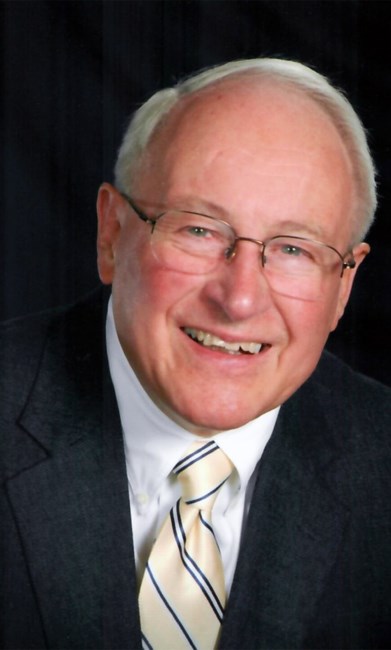
Most of us take technology for granted. When handed a new device we're content to enjoy the benefits and, if we reflect at all on how it operates, that consideration is casual and short-lived as our attention shifts to other things. Millard Alvin Habegger did not take technology for granted. He was deeply curious about the physical. His most frequent reaction to a new device was to ask aloud how it worked, and then he'd dart into his well-stocked workshop to fetch the appropriate tool so he could take it apart. Most of the devices he disassembled were electronic and that suited him just fine. With undergraduate and graduate degrees in physics from Purdue and Caltech, including a PhD in solid state physics, he had no problem studying the layout of a circuit board, inventorying the components and reverse engineering how it worked.But, he wasn't content to just study the creations of others, of course, he built plenty of his own. Over a 25 year career as a physicist at IBM he worked on projects ranging from high speed printers to hardening electronics to survive a nuclear blast (his career spanned the Cold War, after all). He was issued 15 patents related to his work at IBM, and three more for work he did independently. He spent hours in his workshop building and improving just about everything. Millard built a color TV for his wife, Nancy, in their 2nd year of marriage. Later, in 1970, when Nancy wanted the latest kitchen gadget, a microwave oven, he built one of those too. Even in his 81st year, when he deemed the electronics on his air conditioner inadequate, he unsoldered components it had been manufactured with and replaced them with ones of his own choosing.Born to Amish parents, Sarah and Amos, on a small farm in Berne, Indiana in 1934 the path of Millard's life seems unlikely. He attended Amish primary school with his siblings, older sister Marie and younger sister Arlene and brother Merlin. His earliest memories were of rural poverty and endless farm work. But, he often told the story about how his parents refused to follow their Amish congregation to Tennessee when the church elders decided that Indiana had become too worldly. With a young family and a new farm, Sarah and Amos left the Amish church and became Mennonites. They were shunned by relatives and former friends for the rest of their lives. That lesson in independent thinking shaped Millard's perspective on the World, and his choices, for the rest of his life.Independence drove him to begin his studies in physics beginning at Purdue, becoming the first person in his family to graduate from college. When he graduated Purdue with his PhD in 1964, at the height of the Cold War, he was offered many jobs in aerospace and weapons building. He eschewed those and instead took a job with IBM, betting that electronics were going to be the bigger thing that mattered more.Millard married Nancy Schurr, a Lutheran from Lafayette, Indiana, in 1964 after being set up on a blind date. The couple moved to Poughkeepsie, New York where son Jay, and daughter Robyn, were born. In 1976 the family moved to Boulder, Colorado because Millard thought Boulder and the West represented the future. Things were happening in Boulder and there was enthusiasm and tolerance for new ideas.One of those new ideas was his own. After he retired from IBM, Millard focused on developing electronic controls for residential HVAC systems. Heating and cooling systems function poorly in most homes because they were dependent on the blunt instruments of building codes and rigid construction. He envisioned nimble electronics that controlled things instead, and kept people safer. He was awarded three patents for his work on electronic control of HVAC systems. The industry didn't know what to make of it and Millard spent years trying to convince them to do things differently. The World is only now catching up to his point of view with smart home products for residential HVAC from companies such as Google among others validating his ideas.Millard fought a battle with pancreatic cancer for almost two years after being diagnosed with the disease in October 2014. He died on August 3rd surrounded by his wife of 52 years, Nancy, and his children Jay and Robyn.Millard is also survived by his grandchildren Callie, Casey, Alex and Elyse.A Memorial Service for Millard will be held at 10:30 AM on Saturday, August 20th at Bethlehem Lutheran Church in Longmont, Colorado.In lieu of flowers, please make a gift to support Pancreatic Cancer Research at the University of Colorado School of Medicine Department of Surgery. Please send your gift to the University of Colorado Foundation, PO Box 17126, Denver CO 80217. Please make the check payable to the CU Foundation and note that your gift is in memory of Millard Habegger. You may also give online at www.giving.cu.edu with indication that it is in memory of Millard.
Show your support
Add a Memory
Share Obituary
Get Reminders
Services
SHARE OBITUARYSHARE
- GET REMINDERS
v.1.18.0