OBITUARY
Harold Jay Hirsch
March 19, 1926 – August 5, 2026
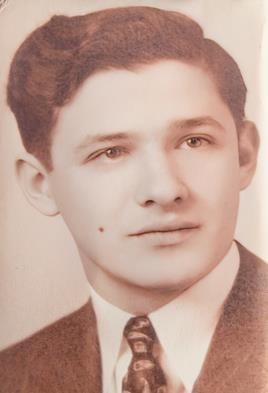
Harold Jay Hirsch was born in Cleveland Ohio on March 19, 1926, to Minnie and George Hirsch. Harold was the baby of the family, after his brother Bernard, “Bernie”, the eldest and his sister, Harriet. Gramma Minnie said that Harold was curious and mischievous and got into trouble, the typical kind of trouble that smart, curious and clever kids got into. As a kid, Harold loved baseball (which, along with golf, was the sport he enjoyed watching his whole life) and when he was 8 years old, he told his mom that he was going to go on this own to the ballpark to watch the Cleveland Indians play. It was raining and Gramma Minnie told him that it was raining and of course he couldn’t go alone. Undeterred Harold responded that he was sure it wasn’t raining at Lee Park, the Indians ballpark, and he was going to go. Of course, he did not get to go to that game. However, Harold had the chance as a kid to see ball games with Hall of Famers Babe Ruth, Lou Gehrig, Dizzy Dean and Bob Feller.
When Harold was a child, Grandpa George decided to buy a dry goods store. Even as a small child Harold helped out in the store, as did Gramma Minnie, and Harold loved being there.
During high school, Harold was introduced to a young attractive teenage girl on the front porch of a high school friend, Shirley, and he was immediately smitten. He asked Shirley for the telephone number of the girl, Vivian Moot, and he then called Vivian to ask her out. Their first date was to an amusement park at Euclid Beach, Ohio, to which they took the streetcar, and that ride started a romance that lasted for 84 years. Vivian was Harold’s proverbial “love of his life”.
Harold excelled in school, particularly in math and science classes, and graduated from John Hay High School in Cleveland. When Harold graduated from high school, World War II was raging. Not wanting to get drafted into the Army, Harold enlisted in the Navy. Because he wore eyeglasses to correct his poor vision, the Navy rejected him but a short while later, he received notice that he had been drafted into the Navy. Soon Harold was off to basic training and then was shipped out to the Pacific. Because of his engineering bent, Harold applied to be a CeeBee, the division of the Navy that was responsible for constructing airfields and base camps once the fighting troops had established a beach hold. Throughout the time he was away, he wrote to his sweetheart who prayed he would return and thankfully, in late June 1946, he did return, a lot skinnier (“for this I waited 2 years”, Vivian told him) but healthy and whole.
Three months later, Harold and Vivian were married, and they soon moved into Gramma Minnie and Grandpa George’s 2nd floor. Harold was admitted to Western Reserve University, helped out by the GI Bill, and studied chemistry, graduating from Western Reserve University with a Bachelor of Science in Chemistry. While Harold was in college, Vivian worked at the Veterans Administration in the prosthetics department, helping returning veterans with artificial limbs. Harold worked at the store in between classes and on Sundays (of course the store was closed on Shabbat). Harold secured a job in chemical engineering at US Rubber in Painesville, Ohio. Harold and Vivian struck out on their own and a couple of years later, 7 years after they were married, Bruce was born and then a little less than 4 years later, Gary was born.
In the early 1960’s, commercial aviation had grown and then the space program was born and California was becoming an important hub of the aerospace industry. The opportunity for chemical engineers was great in California and after Vivian’s sister Marlene moved to California, Harold sought a job and secured work with Douglas Aircraft. Although he hated to leave his mom and dad whom he dearly loved and his brother and sister and their families and the rest of his Cleveland relatives, they moved to California and never looked back. But Gramma Minnie and Grandpa George came every winter, on the train, to stay with the family for 3 months in the small two-bedroom Sherman Oaks apartment. Harold spoke regularly with his sister Harriet and brother Bernie, both of whom he missed greatly.
Grandpa George and Gramma Minnie were orthodox Jews so, as a child, Harold was accustomed to attending synagogue on Shabbat and keeping kosher. Vivian grew up in a much less observant family so after Harold and Vivian moved to California, they joined a conservative synagogue where Harold and Vivian became very active, Harold becoming a temple board member and Men’s Club President and Vivian, Sisterhood president. Harold and Vivian developed a wonderful circle of temple friends who, for many years, were the center of their social life, Harold playing golf and pinochle with the guys and Vivian playing Mah jongg with the women.
Harold worked for Rocketdyne during the height of the Gemini and Apollo space programs, working on the chemical processes of rocket propulsion for the engines that propelled astronauts into space and to the moon. Harold indeed knew rocket science. Later Harold worked for Hughes Aircraft traveling over 100 miles a day to and from work so Bruce and Gary would not have to be disrupted and change schools—but Harold never complained about the very long drive. He later worked at TRW in Redondo Beach, many miles closer to home, where his expertise shifted to the chemistry of printed circuit boards, what we now call “chips”. During much of this time, his work was on government projects, many of which were very sensitive and Harold had a high-level security clearance. One year, Harold and Vivian went to Europe with friends and the friends wanted to travel into East Berlin but Harold said he couldn’t go because he would lose his job if he did. His security clearance forbade him from traveling into what then were Eastern bloc countries.
While Harold was almost always in a good mood, he was not one who regularly told jokes. That was more often Vivian’s role. During the past few years, Harold’s funny side seemed to blossom, and he would often make the caregivers and Gary and Kara laugh. Harold also developed a close bond with his caregivers, all of whom loved him and provided him with the kindest, most patient and most endearing care possible and the family owes deep gratitude to the caregivers who took care of Harold: Jessie, Mirian, Martha, Patty, Nicky, Jeanette and Elba. They, along with everyone in the family and all who knew Harold, will miss him dearly. May his memory be for a blessing and may he rest in peace.
******
A hundred years is a long time. Any of us would struggle to make the most of a life that long, but to me it seemed like Papa Harold didn't waste a day.
I feel so lucky to have been a part of it.
He and Vivian would have been married 80 years next month, longer than most people live. I think it's hard to conceptualize a marriage lasting that long, and his stoic nature meant he wasn't prone to grand romantic gestures, but those aren't what make a marriage work. It's the everyday moments, like calling into Vivian's office on a day I was helping her with the computer. Vivian was always the talker, always the one to call *me* just to check in and chat, so I was a little surprised to hear Harold on speakerphone, calling just to say hi. The fact that *Vivian* was the one to end the conversation after just a minute or two was even more shocking if you know her. In that tiny moment I glimpsed the depth of his devotion to her in a way he'd kept *just* between the two of them. They were truly best friends.
He fought in WWII as a Navy man, joining the Seabees in 1944 at age 18, only two years after meeting the love of his life***. If you don't know about that unit, it was made up of the most skilled tradesmen and engineers and was key to the victory in the Pacific. The Navy itself describes their deeds as "unparalleled in the history of wartime construction." It's no surprise, then, that Harold went on to work on rocket engines as part of the Apollo program that eventually landed on the moon. In April of 1986, he was working on developing satellite photography when excessive radiation was detected in Sweden and eventually traced to Pripyat in the USSR and the site of the Chernobyl meltdown. Before the public knew what had happened, Harold had seen satellite photos of the wreckage. He was one of the first Americans to understand the scale of the disaster.
Luckily, his life was marked by happiness far more than destruction, but it was always defined by hard work and commitment to his family and his principles. One of those principles, passed down from, uh, generation to generation, was thrift. Like many men in the 1940s and 50s, he became a smoker early in life. Of course, smoking is a habit that is notoriously hard to quit, and back then buying a packet of cigarettes only cost a nickel--and who could resist that deal. However, as we started to learn more about the harms of smoking, Harold's habit started to conflict with his core principles. And then, the last straw: one day, they raised the price from a nickel to a dime. He finished his last cigarette that day and never bought another pack.
This was the man I knew: quiet but affectionate, absolutely committed to his family, his duties, and his principles. I'll miss you Papa Harold.
A funeral service will be held at Groman Eden Chapel on August 9, 2026, at 2:00 pm, with a livestream available at https://GromanEdenMortuary.livecontrol.tv/cc4550dd
Interment will follow at Eden Memorial Park on August 9, 2026, at 3:00 pm.
Charitable donations may be made to the Shriners Children's Hospital Pasadena in memory of Harold Hirsch.
https://donate.shrinerschildrens.org/give/716571#!/donation/checkout?c_src=shrinerschildrens&c_src2=main-nav-square
Show your support
Send a Gift
Add a Memory
Share Obituary
Get Reminders
Past Services
Funeral Service
Groman Eden Chapel
Committal Service
Interment
- Send Sympathy GiftsSEND
GIFTS SHARE OBITUARYSHARE
- GET REMINDERS
v.1.18.1