
OBITUARY
James Buchanan Borders IV
April 5, 1949 – August 21, 2026
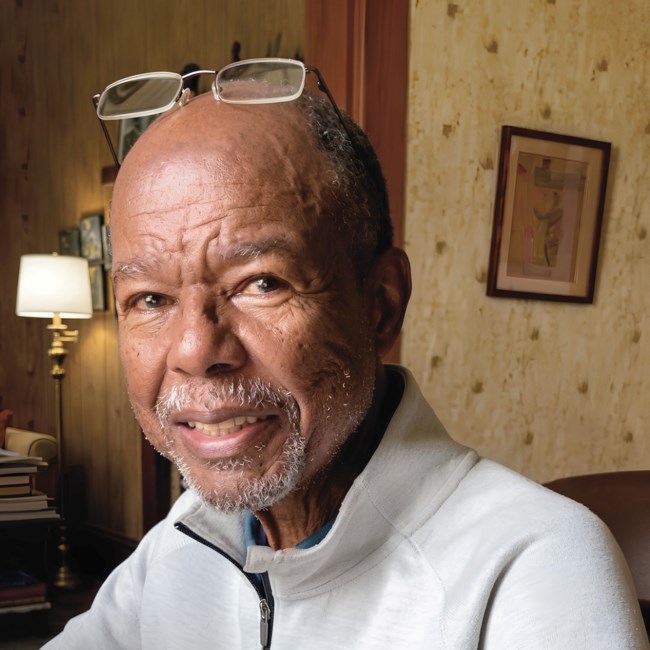
Borders earned a bachelor’s degree in theatre arts (1971) and a master’s in literature and creative writing (1978) at Brown University at Providence, Rhode Island, where he was also awarded the Shubert Foundation Fellowship in Dramatic Writing.
A principal organizer of the 1968 Brown University Black Student Walkout, he appears in contemporary news photographs of the protest. The university’s historical records identify Borders as one of the cohort of students whose organizing helped to increase African American student enrollment and faculty hiring, and to establish the university’s Black Studies program, known today as the Department of Africana Studies. Initially an undergraduate program, the department now offers doctoral degrees across a broad spectrum of disciplines.
It was as a theatre arts undergraduate at Brown that Borders and fellow student Sheryl Brissett Chapman co-founded a groundbreaking student/community/professional and multi-disciplinary performing arts company, which later became Rites & Reason Theatre. The theatre continues to mount new productions and is recognized as the first African American dramaturgical company in the Ivy League.
From 1971–73, while pursuing studies at Brown, he worked full-time as coordinator of major events at the University of Rhode Island at nearby Kingston, Rhode Island. In addition to booking a wide range of celebrity lecturers, he coordinated large-scale concerts featuring jazz, rock, and popular music by a broad spectrum of performers. Poet and autobiographer Maya Angelou and soul music song and dance sensation Jackie Wilson drew particularly large audiences.
Borders acted professionally with Free Southern Theater, and in a long running production of the hit jazz musical One Mo’ Time. As member of the Screen Actors Guild since 1976, he appeared in more than two dozen feature and made-for-television films and commercials.
An award-winning journalist, he was from 1979–1986 editor of the national bi-monthly publication, The Black Collegian Magazine. In 1984, he and the late Kermit Thomas co-founded a political news organ entitled The New Orleans Observer. Shortly after, with Beverly and Dwight McKenna, he co-founded the New Orleans Tribune. As founding editor, he wrote the political column Borderlines, which he later redeveloped as the online series.
Borders managed and directed numerous arts/cultural organizations, programs, and festivals, including Junebug Theatre Productions, which developed from the famed Free Southern Theatre (FST). It is best known as the cultural arm of the Student Non-Violent Coordinating Committee (SNCC), the largest student activist organization of the American Civil Rights Movement.
He served as managing director of the National Black Arts Festival (NBAF) in Atlanta from 1993–1995. The 1994 NBAF directed by Borders ran for ten days from late July through early August. He chose as that year’s theme “The African American Improvisational Tradition 1963–1993: 30 Years of Struggle toward a Vision of Salvation.” Events included the art exhibition “Malcolm X: Man, Ideal & Icon”; documentary films on the lives and works of poet Audre Lorde and preeminent sociologist and intellectual W. E. B. DuBois; performances by the Art Ensemble of Chicago; poetry readings by Sonia Sanchez, Haki Madhubuti, Nikki Giovanni, and the Nuyorican Poets; concerts by vocalists Nancy Wilson, Abbey Lincoln, and Cassandra Wilson; as well performances by percussionist Vinx, and Grammy award-winning jazz trumpeter and flugle-hornist Roy Hargrove.
From 1995–2001, he served as executive director of the Louisiana Division of the Arts (LDOA), the state’s primary arts funding agency. At LDOA, he oversaw a multi-million annual grant-making budget providing financial and technical support to hundreds of Louisiana artists and nonprofit institutions.
His public service included serving as grants review panelist for the National Endowment for the Arts (NEA), the Lila Wallace/Reader’s Digest Fund, Doris Duke Charitable Foundation, the Nonprofit Finance Fund, the Michigan Council for Arts and Cultural Affairs, the Arkansas Arts Council, Entergy Corporation, and other public and private grant-making bodies. He served also on the honorary artistic committee of Étant Donné (the French-American Fund for the Performing Arts), the national policy board of Americans for the Arts, The Association of American Cultures, Southern Arts Federation; Louisiana Film Commission; Louisiana Folklife Commission; the Louisiana Superintendent of Education’s Task Force on Arts Education; and the Contemporary Arts Center of New Orleans. He was president of the Louisiana Jazz Federation from 1980–81, and served for more than 20 years on the board of the New Orleans Jazz & Heritage Foundation.
He was founder and director of J. B. Borders & Associates, an independent consultancy that provided long-term strategic planning and fund development services to an array of progressive nonprofits. The firm operated from 2001 through his final weekly client conference call on the afternoon preceding his death. His clients included such arts and cultural centers and organizations as Efforts of Grace, Inc./Ashé Cultural Arts Center; Junebug Productions, Inc.; Arna Bontemps African American Museum (Alexandria, Louisiana), Le Musée de f.p.c, Louis “Satchmo” Armstrong Summer Jazz Camp, New Orleans African American Museum of Art, Culture and History (NOAAM), Tekrema Center for Art and Culture, Theatre of the Performing Arts of Shreveport (Louisiana), Lula Elzy New Orleans Dance Theatre; Total Dance/Dancical Productions (Atlanta), the independent film Faubourg Tremé: the Untold Story by Lolis Eric Elie and Dawn Logsdon (2008), AFO (All For One) Foundation, which has recorded New Orleans Modern Jazz since 1957, and African Grove Institute for the Arts (AGIA, New York). Borders’ reach also extended to local community and housing development as well as substance-abuse treatment centers including: Gert Town Revival Initiative; Sankofa Community Development Corporation; and Living Witness Community Social Services.
In later years, Borders curtailed his consultancy work and concentrated more on writing and publishing. He is the author of Marking Time, Making Place: an Essential Chronology of Blacks in New Orleans since 1718 (Beckham Publications Group, 2015). At the time of his death, he was adding new materials for a second updated edition. Other publications include “The Natchez Uprising” (Paper Monuments, 2023), and the online short-form political/cultural essay series Borderlines & Other Pieces/Better Blackness.
Born April 5, 1949 in New Orleans, James Buchanan Borders IV was the eldest son of the late Florence E. Borders of New Iberia and James Buchanan Borders III of Macon, Georgia. He was pre-deceased by wife of 16 years Elizabeth Borders Acosta, and daughter Crystal Samuel (age five).
He maintained close relations with his maternal and paternal families, including the Axams, Borders, Edwards, Jacksons, Smiths, and many others. He held a special affection for eldest cousin Tony L. Axam; his children Tony Jr., Cinque, and Tasha; wife Victoria; and their children, Kalen and Karaz.
He is survived by daughter Mia Borders; son James B. Borders V and daughter-in-law Rosalind; grandchildren Zelda, Gustavo, and Langston; brother Sylvanus Edwards Borders; sister Thaïs Adams Gay and niece Julie Adams; and long-time companion and life partner Brenda Marie Osbey.
A memorial honoring his life and work is scheduled for Thursday, October 8 at the André Cailloux Center at 6p. He leaves a legacy of cultural leadership, intellectual rigor, creative vision, and steadfast commitment to the communities he served. Those who wish to honor his legacy and work can donate to the Borders Foundation through www.thirdcoastnola.com/borders-foundation.
Show your support
Add a Memory
Share Obituary
Get Reminders
DONATIONS
Services
Memorial Service
Share
Service
SHARE OBITUARYSHARE
- GET REMINDERS
v.1.18.0