
OBITUARY
Eleuterio Joe Marquez
February 21, 1925 – August 28, 2015
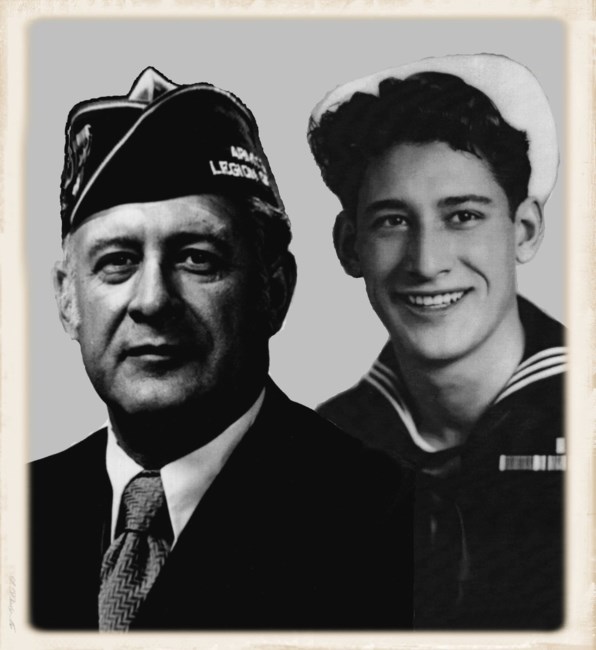
His given name was Eleuterio, a name he was never fond of, so he took the name "Joseph" and although his family and childhood friends called him by the nickname, "Teyo", to everyone else he was simply "Joe". I was lucky to have called him Dad.
My father's parents emigrated from Mexico, like thousands of others at the beginning of the 1900s , fleeing north to escape the violence of the Mexican revolution and to find a better life for their family. Dad was born in Los Angeles but he grew up in the small town of Tonopah, Nevada where his father worked as a silver miner.
He often talked about his idyllic childhood, living in a small town where friends became friends for life. He was high school class president and he excelled in basketball, becoming captain of the high school basketball team. When he would imagine his future, his dream was that one day he would coach basketball for Tonopah High School.
He was still in high school during the opening years of World War II. Then, on December 7th, 1941, Pearl Harbor was attacked. Everyone's world changed and suddenly many dreams would never be fulfilled, including one young man's dream of coaching basketball. The extreme patriotism which followed Pearl Harbor captured the hearts and determination of most Americans including Joe and his friends. At the age of 17, Joe, along with two of his best friends, Bob Warren and Sammy Petrovich, left school and traveled by train to Salt Lake City. They reported straight to the military enlistment center and declared to the sergeant that they were ready to sign up for America and fight to defeat the Axis armies in defense of a free world. The recruiting sergeant asked them how old they were and after learning their ages, he told the three young men to go home and come back after they finished high school. My dad was always grateful to that sergeant. He said it was some of the best advice he was ever given.
A year later, after all three friends finished high school, again together they traveled to Salt Lake City to enlist. This time they succeeded. While in Navy boot camp in San Diego, my father had to decide what specialty he wanted to be assigned to. To him, the specialty of hospital corpsman sounded perfect. He imagined it would be an easy job working in a hospital, not realizing at the time that another term for hospital corpsman is "combat medic" and as a Navy hospital corpsman you are a combat medic for the Marines!
Many seemingly endless days passed in preparation leading up to that fateful battle beginning in September of 1944. My father was assigned to the First Marine Division. The First Marine Division was given orders to take the tiny, and now mostly forgotten, Japanese held island of Peleliu in the South Pacific. The “top brass” believed it would be a relatively minor operation for the Marines. It was all expected to be over so quickly, two or three days at most, that the upcoming battle was barely even covered by the media. It turned out to be one of the bloodiest battles the Marines had ever fought, lasting for over two months.
On the night of October 13, the struggle for the possession of Peleliu had been raging for almost four weeks. Joe and his exhausted marine unit were attempting some much needed sleep on top a hill which they had only recently captured from the enemy. At that same moment, unknown to the battle weary marines, slowly and quietly, a unit of Japanese soldiers were making their way up the hill toward them with the intent of revenge and of regaining this tiny part of island which was slipping from their grasp.
In the pitch darkness, Joe was suddenly startled awake by the distinct popping sound of a firing pin and the fuse of a Japanese hand grenade began to count down its last seconds. Then the explosion: He felt his leg fly upward and he silently cried out, “Oh, God, please don't let me lose my leg!" Hot metal shrapnel from the grenade and blasted pieces of coral which seconds before had been his bed, tore into his leg. Joe had been lucky, he lay wounded but around him lay the bodies of several less fortunate marines. Then quickly, a fierce and desperate hand-to-hand struggle ensued among the marine survivors and the Japanese soldiers. After desperate “hour-long” minutes, after more marine casualties and after every Japanese soldier had met his end, the Marines had prevailed.
Nearly in shock, Joe lay wounded, but he realized he wasn't the only man on that dark terrifying hill in dire need of medical attention. Most importantly, he knew he was the only man among them with the skill to save his wounded comrades. Joe asked the officer-in-charge to call in to have a flair dropped overhead in order to give him the light he would need to do his work, but the officer-in-charge was also wounded and his only response to my father was, "You're in charge now, Doc". Despite his severely wounded leg, Joe dragged himself from marine to marine until he had attended to all the others. He ensured they were evacuated first before he accepted aid for himself, only then, finally allowing himself to be evacuated. For this act of selfless heroism, my father was awarded the highest honor given by the U. S. Navy, the Navy Cross. This experience defined him for the rest of his life.
Shortly after the war, in an unexpected reunion, Joe met up with his enlistment friend, Bob Warren. The joy of the moment quickly turned bittersweet however as they remembered their other friend, Sammy Petrovich who had not been as fortunate to survive the war.
To me, my father was always a hero. He was the best father anyone could have wished for. The only shortcoming I ever knew him to have was a reluctance or perhaps an inability to express his deepest feelings. And yet, despite that, I never once doubted his love for me. It was obvious in everything that he did that he loved his family and was prepared to defend it with his life.
Dad was a true hero. He was also a humble and quiet man. He loved people, his friends and family and he lived a very long and a very good life. His was a life to be celebrated. We cannot be sad for him, only sad for ourselves that he is no longer with us. To describe him in one sentence: I think it can be said that always, always he thought of others before he thought of himself.
Joe leaves behind his wife of 64 years, Annette, his two sons, David and Richard, his sisters, Lupe and Dora, his grandsons, Nicholas and Steven.
He will never be forgotten and always in our hearts.
A military ceremony will be held in Joe's honor at Fort Rosecrans National Cemetery – Point Loma, San Diego on Friday, March 4th, 2016 at 12 noon. All are invited but seating will be limited.
All are invited to a gathering afterward at the house of David Marquez, 2043 San Remo Drive, Oceanside, California at 2:30 pm.
Show your support
Add a Memory
Share Obituary
Get Reminders
Services
SHARE OBITUARYSHARE
- GET REMINDERS
v.1.18.0