OBITUARY
Tuz-Chin Ting
February 8, 1935 – September 13, 2026
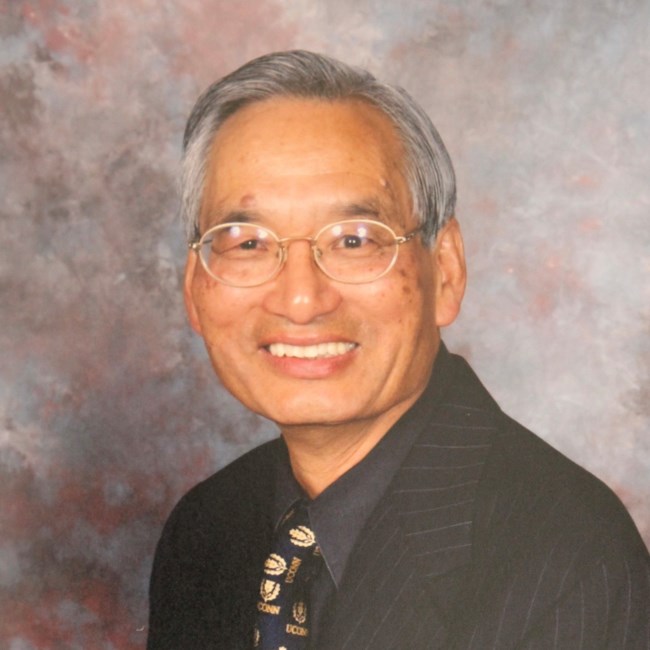
Tuz-Chin Ting, 91, of Carlsbad, California, known as TC or Professor Ting, passed away surrounded by family at Scripps Memorial Hospital in La Jolla, California. He and his wife Shirley had just celebrated their 60th wedding anniversary with family. He will be remembered as a person of enormous enthusiasm and intellect, and as a role model and provider for his immediate and extended family.
His formative years were marked by tireless efforts to better himself and his family, leading to many “firsts.” Born during wartime China in Hangzhou, his family was forced to move frequently, returning to his hometown of Wuxi only at the end of the Sino-Japanese war in 1945. With the end of the Chinese Civil War in 1949, he fled to Taiwan, and supported his family by working at the Chinese Broadcasting Corporation (1951-1958). Trained as a radio technician and still a teenager, he quickly advanced to engineer-level positions. At CBC he helped install the first radio transmitters enabling north-south communications across the mountainous island, created the first video image in Taiwan in the Engineering Research Department, and supported renowned experiments in the Wave Propagation Lab at National Taiwan University. He also enjoyed swimming, distance running, going to the beach, hiking, boating, and dancing. He would visit home on weekends, where he built a bookshelf and filled it with books to provide a suitable study environment for his younger siblings. Though he had to forgo a typical high school education, he quietly enrolled himself in night school and took the college entrance exam without telling anyone. He earned a bachelor’s degree in Health Education at National Taiwan Normal University and worked as a junior high school teacher and then a medic during his military service. He was the first in the family and in their entire community to get into college and study abroad, and was someone many looked up to.
He pursued graduate studies in the US, supported by full scholarships, and was the first Chinese student to attend Central Washington State College in Ellensburg, WA. In 1965 he received a Master’s degree in Education with a minor in microelectronics (also a first). He went on to Washington State University, earning both a Master’s degree in the new Information Science Program and a Doctor of Education. He still worked multiple jobs to send money to his family. As a foreign student liaison, he met his wife Shirley Maushu Wu; they were married in 1966, and their daughter Lena was born in 1968. Upon graduation, he became an assistant professor of Computer Science at Virginia Tech and his second daughter Yvonne was born in 1971. Of note, during graduate school he was invited to apply for US permanent residency based on his scholarly work–a direct consequence of the Immigration and Nationality act of 1965 that ended quotas set in motion by the Chinese Exclusion Act of 1882. He became a permanent resident in 1967, and a US Citizen in 1975.
His professional career as leader and system builder in computing and education was also quite remarkable. In his first year at Virginia Tech, he won a teaching award for his brand new (and bold) courses in computing. In 1972, he joined Italy’s leading industrial corporation, Italcementi in Bergamo, Italy, facilitating their early adoption of large-scale computing and information systems. He left in 1973 to provide a better environment for his wife and children, landing at Georgia Tech. There, he was elected Chair of the School of Information and Computer Sciences, the first associate professor to take on that role. He then served the National Science Foundation as a program officer of the International Directorate, traveling extensively in Asia to build US scientific relationships. In 1980, while working at the National Bureau of Standards, President Jimmy Carter appointed him as a Founding Professor of the US-China Training Center in Dalian, China. He later served as Department Chair of Computer Science at Worcester Polytechnic University (1981-1986), and Associate Dean of Research in the University of Connecticut College of Engineering (1987-2002), where he retired as Professor Emeritus.
He loved and supported his family with the same energy and intrepidness that he approached all things. He instilled in his daughters a can-do attitude, adventurous spirit, and a love of good food and travel. He could learn anything, whether cooking or skiing, and then teach everyone else. He was stubbornly independent and insisted on doing things himself: repairing cars, building swing sets and furniture, tending to his and Shirley’s beautiful gardens, and building outdoor stoves to fry chicken or boil blue crabs from the Chesapeake Bay. He climbed trees, paddled canoes, and skied and hiked mountains throughout the world with his wife and children. He orchestrated the family assembly line when making jiaozi (dumpings) from scratch, a tradition he passed on to his grandchildren Zane and Miranda. When gathered to feast, he always gave the choicest cuts to others as he relished sucking marrow bones or a mango pit, and picking through the head of fish or lobster. His loud laugh and hearty jokes could always be heard above the din at a party.
He was a champion of others, dedicating his resources–be it time, money, influence, or advice–to those he cared about. He was often on long phone calls to people around the globe, providing counsel. He helped almost every member of his and Shirley’s families immigrate to the US and Canada and supported them as they established new lives. The impact spanned generations, including parents, siblings, nieces and nephews. Professionally, he mentored countless others as they advanced in their careers in academia, government, and business.
In retirement, he and his wife traveled extensively throughout the world and enjoyed spending time with friends. They sang in Chinese choruses and skied every winter. He celebrated his 80th birthday with a cake surrounded by friends at the top of Vail’s Back Bowl. Ever the professor, he loved an audience and would happily give lectures on wide-ranging topics to those around him. Most recently they chose to live in Carlsbad, California where they enjoyed frequent walks along the seacoast and around the Batiquitos Lagoon.
In lieu of flowers, please consider donating to the Professor TC Ting Memorial Scholarship Endowment at Central Washington University.
Show your support
Add a Memory
Share Obituary
Get Reminders
Services
Celebration of Life and Reception
Share
Service
SHARE OBITUARYSHARE
- GET REMINDERS
v.1.18.0