
OBITUARY
Abigail Marie Johnston
December 21, 1978 – October 29, 2026
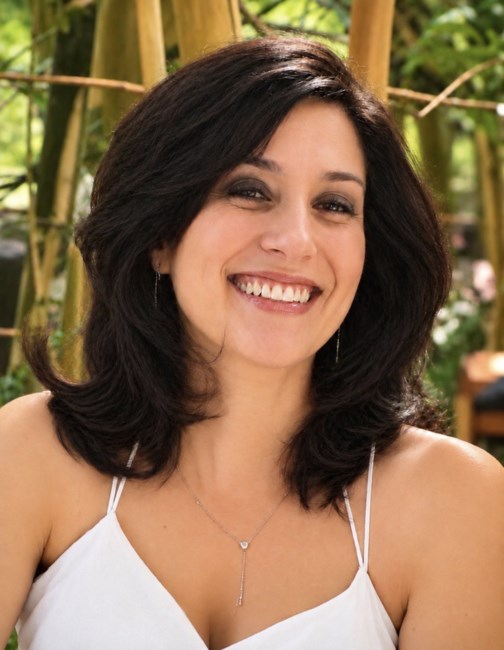
Much of this obituary was written by Abigail herself before her passing, reflecting her characteristic wit, honesty, and unmistakable personality.
There are probably more appropriate ways to begin an obituary, but this is not going to be one of them.
First, cancer is a horrible disease and it needs substantially more research funding. This should not be controversial, but apparently we still need to say it. Abigail spent the last years of her life learning more about breast cancer than anyone should ever have to learn, working with researchers and clinicians, advocating for herself and others, and trying, in her own small way, to make sure the people who came after her had better options.
She would have preferred better options herself. Cancer took Abigail’s physical body, but it did not get to define her life.
That distinction matters.
Abigail spent her early years being homeschooled and spending lots of time with the people who would remain some of the most important people in her life. Eventually, her parents made the decision to send her to public high school, paving the way for her five younger siblings.
Being the firstborn, Abigail was, in many ways, the trailblazer of the family. Rather than being particularly bothered by that designation, she embraced it and made it her own. This turned out to be a recurring theme in Abigail’s life: someone had to go first, so she went first. Then she figured out how to make the path easier for everyone coming behind her.
After graduating from Licking Heights High School in 1996 at the age of 17, Abigail attended the University of Central Florida from 1996–1999, where she earned her Bachelor of Arts in English. She then attended Regent University School of Law from 1999–2002, earning her Juris Doctor. She passed the bar in 2002 and practiced law in Orlando. Never one to stop learning, Abigail eventually returned to UCF and earned her Master of Arts in Education, with an emphasis in Curriculum Design, in 2010, along with a Graduate Writing Certificate.
The English degree reflected her love of language. The law degree complemented her appreciation for precision and her belief that words matter. The education degree explains why she was never particularly impressed by systems that insisted they were doing something “because that’s just the way it works.”
Abigail liked to know why. She liked evidence and precision. She liked words that meant what people said they meant. And she really, really liked being right.
Abigail was married for more than eighteen (18) years to the love of her life, Elliot Johnston. Together, after fertility treatments, they had their two boys, Liam Thomas Johnston and Malcolm Walton Johnston. Liam and Malcolm were the great loves and joys of Abigail’s life.
There are many things Abigail accomplished. There are degrees and careers and organizations and advocacy work and an unreasonable number of words written on the internet, but if you want to understand Abigail, start with her boys. She was absolutely wild about her funny, mischievous, curious, confident, social, strong-willed, dark-haired brown boys. She knew their personalities. She noticed the little things. She worried about them. She delighted in them. She wanted them to know, without any ambiguity, exactly how much they were loved.
Motherhood did not make Abigail less analytical. If anything, it gave her more things to analyze. Being part of a multi-racial marriage meant that Abigail and Elliot made adjustments, navigated differences in culture and family experience, and lived outside the “norm” more often than not. It wasn’t always easy. They just did it together.
Anyone who knew Abigail knows that she was the first person to call if you needed help. Not just legal help, although, obviously, there was plenty of that. She gave energy. She gave money. She gave time. She gave information. She gave advice. She gave whatever she had if she thought it might help someone else.
Abigail did not do anything halfway. No half measures. This was both a wonderful quality and, occasionally, an exhausting one. If she decided something mattered, she was all in and there was not really a middle setting.
She represented foster children in Central Florida as a Guardian ad Litem and Attorney ad Litem. Her advocacy for children eventually led her back to school because she wanted to be able to speak the right language in IEP meetings. Not metaphorically, literally. If a system was going to use a particular language to make decisions about a child, Abigail was going to learn that language.
Once she had children and was breastfeeding them, Abigail donated more than 25,000 ounces of breast milk and served on the board of GetPUMPed!, a formal milksharing nonprofit in Central Florida. Twenty-five thousand ounces is a lot of milk! Abigail would probably want that number included because numbers matter and because someone, somewhere, should understand what that actually means.
Then, in 2017, Abigail was diagnosed with cancer. Initially, the diagnosis was Stage II breast cancer. It wasn’t, the disease had already metastasized. De novo Stage IV Metastatic Breast Cancer (MBC). Terminal. Incurable.
Those words matter, too.
Abigail was not interested in euphemisms. She was not interested in being told that cancer was a “journey.” Journeys are chosen, but this was not. She was not interested in toxic positivity or inspirational platitudes or being told how “strong” she was when what she actually needed was someone willing to acknowledge that the situation was terrible. She wanted the truth. Even when the truth hurt, especially then.
And so she did what Abigail did when faced with something she didn’t understand. She learned. She read. She asked questions. She found experts. She questioned experts. She learned the terminology. She learned the science. She learned how clinical trials worked. She learned how research was funded. She learned where the gaps were and then she started telling other people what she had learned.
She advocated for herself. She advocated for other people with metastatic breast cancer. She helped existing nonprofits accomplish their goals. She started her own. She worked with researchers and clinicians. She spoke publicly. She wrote. She wrote a lot.
The blog, No Half Measures, became one of the places where Abigail processed what was happening to her. Writing had always been one of the ways she made sense of the world, but cancer gave her considerably more material than anyone would have reasonably requested. She wrote about cancer. She wrote about motherhood. She wrote about marriage. She wrote about faith. She wrote about grief. She wrote about pain. She wrote about fear. She wrote about the healthcare system and insurance and research and language and hope and the complicated business of continuing to live while knowing that eventually you will die.
She also wrote about ordinary things. This was important, because one of the things cancer tried hardest to do was convince Abigail that her life was now primarily about cancer. It wasn’t. There were soccer games. There were school supplies. There were birthdays. There were family dinners. There were arguments. There were jokes. There were ordinary Tuesdays.
There was Elliot. There were Liam and Malcolm.
There was life and life continued to matter even when it became increasingly clear that there was less of it ahead than everyone wanted. Abigail wrote about that, too. She wrote because writing helped her process. She wrote because she wanted to leave information behind. She wrote because she hated the idea of someone else having to learn everything the hard way. She wrote because words mattered and she wrote because, sometimes, putting something into words was the only way to make it make sense.
Abigail’s words will continue to help people. That is not the same thing as saying that cancer was a gift. It wasn’t. There is no silver lining large enough to redeem a terminal diagnosis. There is no inspirational lesson that makes children losing their mother okay. There is no amount of gratitude that makes an incurable disease acceptable.
Abigail would probably object strongly to any attempt to make her death beautiful simply because she lived meaningfully. Her death is sad. It is unfair. It is far too soon and it is a loss for far more people than can be adequately listed in an obituary.
But her life was extraordinary. Not because she was perfect. She wasn’t. Not because she was endlessly positive. She wasn’t. Not because she never got angry or scared or exhausted or frustrated. She did. She was extraordinary because she kept showing up. Even when she was afraid. Even when she was exhausted. Even when she was in pain. Even when hope was complicated.
She kept showing up, even for people who would never know her name.
That is a life, and it is a life worth remembering accurately.
Abigail is survived by her husband, Elliot, and their sons, Liam Thomas Johnston and Malcolm Walton Johnston; her parents, Tom and Beverly Schroeder; her five younger siblings, Amy Schneider (Steven), Andrew Schroeder, Kyle Schroeder (Jenna), Tommy Schroeder (Katie), and Anna Putt (Kris) and their children; her Uncle Brad and Aunt Rita; Aunt Suzanne and Uncle David; her cousins Chris Wood (Alesha), Philip Wood (Kylie), Kelli Harmon (Brett), Emily Murray (Philip), and Aaron Marks (Hollyday) and their children; and Elliot’s family. She was preceded in death by her maternal grandparents, William and Marjorie Wood, her paternal grandparents, Thomas and Doris Schroeder and her maternal Aunt Sara.
She is also survived by an army of friends. That word is not accidental. Many of those friends came to visit her in the days leading up to her death. They came because she had spent years showing up for them.
Abigail spent her life building community without necessarily setting out to build a community. She helped people. She connected people. She remembered details. She answered questions. She sent links. She made introductions. She advocated. She wrote things down.
And eventually, all of those little acts became something much larger. A network. A family. An army. A legacy.
Abigail believed that information could make people less afraid. She believed that words could help. She believed that advocacy mattered. She believed that people deserved to be seen and heard, particularly when they were suffering. She believed that we should be willing to sit with uncomfortable truths rather than wrapping them in language that makes everyone else feel better. She believed in showing up. She believed in loving people well.
And she believed in Jesus. So, yes, Abigail went to be with her Lord and Savior. She would want that said plainly. She would also probably want us to acknowledge that being left behind absolutely sucks.
Both things can be true.
Faith does not eliminate grief. Hope does not erase loss. Love does not make goodbye easier. Love is why goodbye is so damn hard.
So here we are, without her. With her words. With her boys. With Elliot. With all the people she loved and all the people who loved her. With the work she started and the work that still needs to be done. With the research that still needs funding. With the children who still need advocates. With the patients who still need be heard.
Abigail leaves behind a legacy of love, determination, compassion, and advocacy. She believed that one person could make a difference, that every voice mattered, and the even the most difficult circumstances were never a reason to stop trying.
And perhaps the best way to honor Abigail is to keep doing what she always did. Show up, speak up, ask questions, love fiercely, and make the path a little easier for those who come behind us.
In Lieu of flowers please see the link below to donate to METAvivor
Show your support
Add a Memory
Share Obituary
Get Reminders
DONATIONS
Services
SHARE OBITUARYSHARE
- GET REMINDERS
v.1.18.1