
OBITUARY
Mary M. Taylor
November 21, 1914 – May 4, 2013
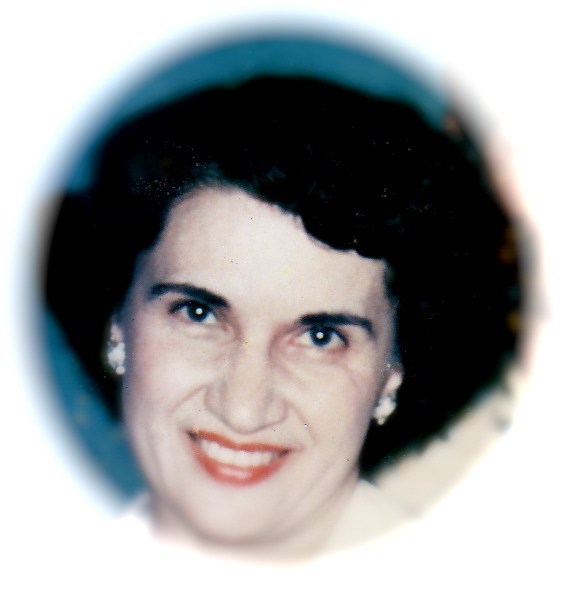
Mary Mildred Taylor of Overland Park, Kansas passed away peacefully at Garden Terrace Alzheimer’s Center at Overland Park on Saturday, May 4, 2013 with her family by her side. She was 98 years young. The family greatly appreciates the compassion, kindness and dignity shown to their mother by the entire staff at Garden Terrace.
Mary was born in Fairview, KS and grew up in nearby Horton. She was the daughter of the late Lee Joseph and Carrie Lavina Winterscheidt, the stepdaughter of the late Homer and Inez Kipp, and the sister of Grace Pell of California, Paul Kipp and his wife Doris of Texas and the late Ivan Winters of Massachusetts.
Mary and her late husband, Clarence W. Taylor, the love of her life, were married for 50 years. Mary continued to live in the same Overland Park residence she and Clarence had purchased in 1941 until the progression of Alzheimer’s in 2011.
Mary is survived by her three children, Ron Taylor and wife, Bunny, of Easton, MD, Carol Ruppelius and husband, Harold, of Overland Park, Mary Beth Daly and husband, Mike, of Overland Park, grandchildren Paul Ruppelius, Lori Hill & husband Rob, Carrie Daly and Sean Daly, great-grandchildren Lauren Hill, Emily Hill and Sean Hill, as well as nephews, nieces, cousins and many, many friends.
Mary’s greatest joy in life was being married to her sweetheart and raising their children. She loved to cook, bake, sew and, of course, tend to her yard full of beautiful flowers. Her neighbors referred to her as the “Lady Bird Johnson” of Overland Park for the flowers and plants she would leave in her driveway for people to take as they passed by. Her life was filled with giving, doing and caring for all who crossed her path and she was happiest when sharing with others whatever she had made or grown.
A Mass of Christian Burial will be celebrated for Mary at Holy Cross Catholic Church, 8311 W. 93rd, Overland Park on Wednesday, May 8, 2013 at 10:30 AM by her longtime friend, Fr. Tony Lickteig. Mary’s Catholic faith was foremost in her life from her earliest childhood memories to sustaining her through her final days.
Visitation will be on Tuesday, May 7, 2013 from 6:00 – 8:00 PM, with the Rosary at 7:30 PM at McGilley & Hoge Chapel, 8024 Santa Fe Drive, Overland Park. A private interment at Resurrection Cemetery will follow the Mass. Rather than flowers or donations, the family requests you wear something pink, Mary’s favorite color, to her services and do something for those dearest to you in her memory.
Arrangements are by McGilley & Hoge Funeral Home in Overland Park, Kansas. A more complete celebration of Mary’s life is available via a link at www.mcgilleyhoge.com.
____________________________________________
CELEBRATION OF MARY'S MEMORY
Mary Mildred Taylor of Overland Park, Kansas passed away ...
Mary was born November 21, 1914 in Fairview, Kansas. The first child of Lee and Carrie Winterscheidt, she attended St. Leo’s Elementary and High School in Horton, Kansas.
On May 28, 1940 Mary and Clarence Wilson Taylor were married at St. Leo’s Catholic
Church in Horton. Clarence and Mary lived in Overland Park, Kansas since 1941 and
were the parents of Ron Taylor of Easton, Maryland, Carol Ruppelius and
Marybeth Daly of Overland Park, Kansas.
--------------------------------------------------
Mom wrote this much of her own obituary sometime after she began experiencing the effects of the insidious disease known as Alzheimer’s. We found it when sorting through old papers by the telephone in the kitchen. (Mom’s recent history could be found there on all variety of scraps of paper that she had made notes on.)
So we her children have written this tribute to our Mom, as there is so much more to our mother’s life story than her own short obituary, or even the newspaper obituary, would indicate. And the best way to tell it is to tell you a few of the memories Mom shared with us over the years, some repeated more frequently as the Alzheimer’s set in, and perhaps with a few of our own memories sprinkled around as well.
Mary Mildred was born the first child to Lee Joseph and Carrie Lavina Winterscheidt in Fairview, Kansas in November of 1941. Lee Joseph and Carrie, as well as all the Winterscheidts, prospered as farmers and feed store proprietors in northeast Kansas. One of Mom’s most vivid memories of the “familie” was their love of life and the fun they shared together. Everyone in the family played an instrument and they had a band that played for Saturday night dances. There was always entertainment at the family gatherings and many times family members were expected to have something prepared to present to everyone. In preparation for one such Sunday gathering, Mom’s mother Carrie had taught Mom a poem, which she was to recite. However, when the time came for Mom to perform, she was too nervous to speak. So her Grandfather Peter held her between his knees and encouraged her to recite her poem, then passed his hat for everyone to put in a coin for Mom. Years later, well into her 80’s and early 90’s, Mom decided she was going to have “Cousin’s Parties”. She rounded up Winterscheidt relatives far and wide and hosted everyone at her house for several years, where they each shared their Winterscheidt family memories.
Similar to her parents & grandparents, there were many fun and happy times at our home growing up. Like the time Mom baked biscuits for breakfast on April Fools Day … with cotton inside! Or strung yarn around the yard from one Easter egg to the next so her baby Marybeth could find all the Easter eggs she had hidden. Every birthday and holiday was celebrated with the full regalia … and enough food for the neighborhood. Mom and Dad loved to dance. Mom said many times Clarence would come home from work and grab her as she was cooking dinner and they would dance around the house! In our later years, we kids learned that when there was a good snow, Mom & Dad would put us kids to bed and go out on the hill on the northeast side of the house and go sledding … and take turns coming into the house to check on us. And at age 98 at Garden Terrace, after a good snow, Mom even talked the aides into taking her out on the patio to a make a snowman. But we’re getting too far ahead …
Mom adored her Mother and would often tell of her mother Carrie’s classical skills – sewing or painting or cooking and presenting a meal or growing award-winning flowers for the Brown County Fair. Mom was very creative as well, so I guess she inherited her mother’s talent. I think her musical legacy was channeled into sewing (she made clothes for all of us) and cooking & baking and painting, but she brought creativity to everything she did, like refinishing & reupholstering furniture or decorating the house or helping us with schoolwork. But of course, gardening was her passion. Each of us kids got some of these talents; none of us got them all.
Her mother Carrie also taught Mom to be a lady! Everything had to be prim and proper. Ladies sat properly and didn’t cross their legs; everyone had dinner together every night, the boys with clean hands & faces, everyone at the table until dinner was finished. Belts, shoes & purse colors matched – no black & brown together and everything was ironed. Mother and her sister Grace were models for young children’s fashions and Carrie would take them to practice walking on the stage before the fashion show. Even in the nursing home, the staff enjoyed helping mother get ready for the day in her color coordinated outfits, complete with lipstick and pink nail polish. Her mother taught Mary to be a lady and appearance was important.
Mom’s father Lee Joseph Winterscheidt died when she was four years old on a family trip to California. After that, as the oldest child, Mom helped her mother raise her sister, Grace Winterscheidt (Pell) and brother Ivan Winters (nee Winterscheidt) in Horton. I think this event defined her life role as caregiver for her family and friends.
One of Mom’s favorite memories was of moving from the farm to Horton and her mother building a new house on 13th Street, just across 1st Avenue from St. Leo’s Catholic Church and School in Horton. Small in stature but strong and self reliant, evidently Carrie conceived the floor plan, contracted the work and met with the workman daily to insure everything was being done correctly. Carrie would leave the kids in the car in front of the new house, with instructions for the kids to behave … and Mom would be assigned to watch over them. Her care giving began early. She always worried about everyone else first; she was probably the original proverbial Jewish mother.
Mom told us often of roller skating with Grace on the sidewalk in front of the house or with neighborhood kids in the basement when it was raining. One of our favorite pictures of Mom is of her as a young girl sitting on the sidewalk, adjusting her skates.
Mom’s mother Carrie married Homer Kipp sometime after Lee Joseph died. She had wanted to buy a car and Homer was the car salesman, who Carrie met when Homer delivered a car for her to test drive. Of course, she couldn’t go with Homer alone, so a neighbor lady rode along in the back seat to chaperone. One of values Mom gave us in life was that of proper behavior and concern for how others would perceive our actions.
Carrie would often use the car to take the Sisters from St. Leo’s to the doctor or back to their main convent in Atchison and the kids would ride along. Growing up Catholic, Mom’s faith was always important in her life, from these early experiences to her last days. Mom and Dad would make sure we kids had the same faith foundation and education as part of our lives, even though I’m sure they had to forego things for themselves to pay the tuition to send us to Catholic school.
Another brother, Paul Kipp, was born while Carrie & Homer lived at the house in Horton. Carrie then tragically died while undergoing a hysterectomy operation when Mom was eleven years old. So now Mom was mother to Grace, Ivan and little Paul, while stepfather Homer had opened an appliance shop in Horton and later was the sheriff in Hiawatha. Since school was across the street, Mom would run home at lunchtime and do family chores like ironing or prepping for the evening meal, then run back to school as the bell rang. Care giving for others was ingrained by now.
The depression eventually wiped out the appliance store and the family wealth. Homer had sold many of the store’s household items on credit and customers just had no money to pay what they owed. Mom tells of Homer giving her and Grace a list of the people who owed him money and telling them whatever they could collect they could keep. Times were tough, but they would feed hobos at the back door frequently at dinner. Like many people from that era, the depression defined their future behaviors. Mom and Dad always saved money, paid cash up front and lived within their means. And Mom never threw anything out. (I can attest to this from cleaning out the attic & basement.) She would always try to re-purpose the littlest thing, so our house was full of pieces off of things broken or found or just interesting. Mom would bring in extra money sewing or knitting for people or selling produce from our garden. Important life skills we kids learned from watching our parent’s behavior.
We heard stories of double dates with her sister Grace and “boy friend” encounters as Mom was growing up, but one boy Mom met was more persistent than all the others. Clarence Taylor grew up in the neighboring then railroad town of Willis, Kansas. We think Mom and Dad had dated a little in Horton, but Dad had decided to move to Kansas City to pursue something other than farming or blacksmithing. Somehow they continued to see each other, as Daddy would go back to Horton or Mom would stay with Daddy’s old maid aunts Minta and Laura in Leawood. Eventually Daddy wanted to get married, but Mom stayed with her stepfather Homer to raise her brothers and sister … and Daddy waited for her. Eventually they would marry on May 28, 1940 in Horton, in some measure due to my father’s surprise conversion from his family’s Methodist legacy to Catholicism. Evidently Mom & Dad went to mass when Mom would visit Daddy in Kansas City and on one occasion Daddy followed Mom to communion; she was appalled, as she didn’t know he had taken instruction to become Catholic. That’s how we kids learned the importance of such a committed, life-long relationship. Well at least two out of three of us learned that lesson; the other one needed some practice first.
Clarence & Mildred lived in an apartment on the Country Club Plaza for a short while after getting married. The apartment had no air conditioning of course and one hot, muggy evening they took a drive out to the country – then Overland Park. They happened to drive by a house under construction and thought how nice it would be to live in the country where it was nice and cool. The next weekend they drove out again and went by the same house. The builder, George Breyfogle, was inside working on the house. It was on the northeast corner of 85th Street & Marty; Marty Street would subsequently be renamed Riley Street, as the eight lots to be known as Breyfogle Gardens were eventually built out.
Anyway, Mom says Daddy fell in love with the house and convinced Mom that they should buy it. Of course, I’m sure Mom loved the house as well or it would never have happened. So in October 1941, they purchased “all of Lot 6 and the north 100 feet of Lot 7 in Breyfogle Gardens” for $5,250. In spite of Homer’s warning that they would lose everything, they put down $450 that they had saved, paid another $200 at closing and took out a $4,600 mortgage at 4.5%. (I think this was the only thing they ever purchased on credit.) So began Mary’s 70 years at 8501 Riley, where we all grew up. After Daddy died in 1990, Mom continued to live on there by herself until 2011, when Alzheimer’s made it unsafe for her to be by herself.
Clarence and Mildred had no furniture when they moved in to the new house; they slept on a mattress on the floor. They had a single burner hot plate that had been given to them as a wedding present and Mom would cook meals on it, one dish at a time. Daddy got a couple of wooden nail kegs at the lumberyard and Mom upholstered the tops to make seats and they used orange crates to put their clothes in.
Clarence had been smart enough to buy the extra lot as part of the house; I think he was already envisioning his garden and the small grouping of cherry, apple and peach trees he planted. And of course, Mom created flower gardens everywhere else. There was always fresh corn, beans, peas, onions, tomatoes, etc. in the summertime. And I can still picture Mom sweating in the kitchen in the summer with the water boiling on the stove, as she canned & preserved fruits and vegetables.
As paydays came, they saved and gradually added furniture and appliances and Mom’s curtains & decorations and a house became a home. Mom would always refer to these years as “Happy Times”. We kids all got a little of the home & garden genes from Mom & Dad, though perhaps not with the same passion they had, but we all have the same appreciation and pride in a safe and happy home … with flowers.
These were now the war years. Clarence went into the Army in 1943, leaving Mom pregnant and caring for the house. Dad never talked much about his service experiences, though perhaps it was because I never asked. He trained in Fort Leavenworth & Fort Benning, and Mom would drive to Leavenworth to see him while he was there and show him his son. One particular trip, she was low on gas and could not buy gas with her ration coupon book until the following week. She worried all the way home with her new baby in the car that they would be stuck someplace, as at that time there was not much but Kansas farmland between Leavenworth and Overland Park. When she finally rolled into the Standard Oil station at 83rd & Metcalf the next week, the attendant told her she was running on fumes. After basic training, Clarence was sent to Hawaii to guard strategic sites and prep for the invasion of Japan. Fortunately, the war ended before he shipped out so he didn’t see any actual fighting, but he did go to Japan as part of the occupation force. All through service, Daddy would send his pay home to support Mom and the new house. Mom thought he missed some of the “see the world” experience because of this.
Ron, or rather “Ronnie”, was born in 1943 after Clarence left for the service, Carol Kay in 1947 and the baby Marybeth in 1954. Dad spent long hours commuting and working, took care of the garden, was Mr. Fixit around the house and loved to barbeque. Many Sunday afternoons, Dad would start the grill, Mom would put the water on the stove … and then go out and pick fresh sweet corn and tomatoes. Maybe that is why my favorite meal to this day is corn, tomatoes and hamburgers on the grill.
Mom’s days were spent caring for us and the house and refinishing furniture or making us new outfits and of course tending the flowers. Big home-cooked meals were family times in the early years, especially on Sundays, with enough family style entrees to feed all the farmhands back in Horton. Mom’s baking was a prized possession to take back to school when I was in college. Carol remembers that when she had girl friends over for slumber parties, Mom would get up in the middle of the night to start the yeast dough for donuts, so that when the girls got up in the morning, the donuts were ready to fry and the girls could decorate them with frosting and chocolate and sprinkles. And Marybeth remembers that after dating Mike for a while, he would invite her to his parent’s cottage on the Lake of the Ozarks. Mom would always send Marybeth with fresh baked bread or something; one time when Marybeth was not there, Mike’s dad Clinton asked why he hadn’t invited Marybeth that weekend so she could bring her baked treats and goodies. I’m sure Clinton loved Marybeth, but then again pies and cakes and fresh bread were not to be turned down.
Mom loved to ice skate and grew up skating on Horton Lake. One of Carol’s other favorite memories is Mom teaching her to skate down at South Lake, a block from our house on Riley. There were always bonfires on the lake at night, with kids of all sizes skating and playing hockey.
Mom found time to do sewing and knitting for others to bring in extra money. And she would package up vegetables from our garden, which I would peddle in the neighborhood … and got to keep the money. We got by without want, but I’m sure Mom and Dad gave up many, many things to make sure we were taken care of. They watched every penny they spent and planned and saved when a big-ticket item was needed.
We kids all gradually left the nest and began our own families, Carol marrying Harold Ruppelius and Marybeth marrying Mike Daly and Ron double-clutching before finding happiness with Bunny. Mom’s chicks grew to include grandchildren Paul Ruppelius, Lori Ruppelius Hill and her husband Rob, Sean Daly, Carrie Daly and great grandchildren Lauren, Emily & Sean Hill. Birthday parties and special occasions were always at 8501 Riley and if there wasn’t a special occasion to draw a crowd Mom would create one … like baking her “world famous” cinnamon rolls.
As we kids built our own lives, Mom was still caring for us, like making all the costumes for Marybeth’s dance students. But I guess there weren’t enough people who needed her daily care now, so Mary began her own Meals on Wheels, and eventually Meals on Foot after she gave up her car. Whether friends from church or neighbors who needed help, Mom would make complete meals and take them to people every day who were shut in.
Mom aged well and always had lots of energy. She would stay up late and get up early and was always doing something, though she was usually happiest in the yard. One winter after she fell on the ice and broke her wrist, she would weave potholders with her good hand to keep busy. After dad died and we all left, Mom lived by herself on Riley Street, the house she and Clarence purchased in 1941, until 2011, a little over 70 years. Except for having the yard mowed, she cared for most things by herself. You could find her tending her flowers until the sun went down in the summertime. She loved talking to the people walking by and would give them starts of her flowers. Each of us kids have some of Mom’s prized iris and peonies in our yards. There is some pride, and peacefulness now, sitting in the living room and seeing Mom’s peonies bloom each spring.
Mary was 96 when we coerced her to move to Vintage Park Assisted Living and subsequently to Garden Terrace. To her last days at Garden Terrace, she would say she had a lot to do today. When we would ask her what she had to do, she would always say she had to “run the sweeper and wash windows” … when you knew what she meant was she wanted to work in the flowers, since house cleaning was not her favorite.
Both physically and mentally, Mary Mildred was a tough “cookie”, as Marybeth would call her. And as Marybeth’s husband Mike would say, “she is the toughest person I have ever met”. She was a colon cancer survivor, from an earlier time when there were not as many cancer survivors. At some point, we noticed Mom wasn’t seeing as well as she used to. She was diagnosed with macular degeneration and got her first pair of glasses well into her 90’s. Her hearing was fading about this time too and she struggled with trying to get used to hearing aids. She never complained about anything and though the macular degeneration made everything seem dark to her, she would always say, “it’s a beautiful morning, isn’t it?”
There was never a lot of “tell” from Mom, or Dad for that matter, but when she made up her mind there was no changing it – you couldn’t tell her different. And this was long before the Alzheimer’s set in. Mom and Dad always made decisions together, though somehow I think Mom’s vote counted a little more. Come to think of it, I guess that’s the way it is for a lot of us men.
In childhood through mid-life, Mom was usually known as Mildred, I think because there was another little girl named Mary in her class in grade school. She was also Millie to some, but she was Sweetheart to husband Clarence and her Grandson Paul. In later years, she was Mary and I’m not so sure but that she didn’t like Mary better. Whatever, Mary Mildred Wintershceidt Kipp Taylor lived her life and raised her family by her example, with quiet confidence, proud but humble, a life defined by caring for others. And in return, her cheerfulness and caring was paid back a hundredfold with love from all who knew her. I choose to think her life and legacy will live on through us, her children, our families and all those she touched.
Show your support
Add a Memory
Share Obituary
Get Reminders
Services
SHARE OBITUARYSHARE
- GET REMINDERS
v.1.18.0