
OBITUARY
Mrs. Kwo-Yin Chu Hang
March 5, 1925 – November 4, 2021
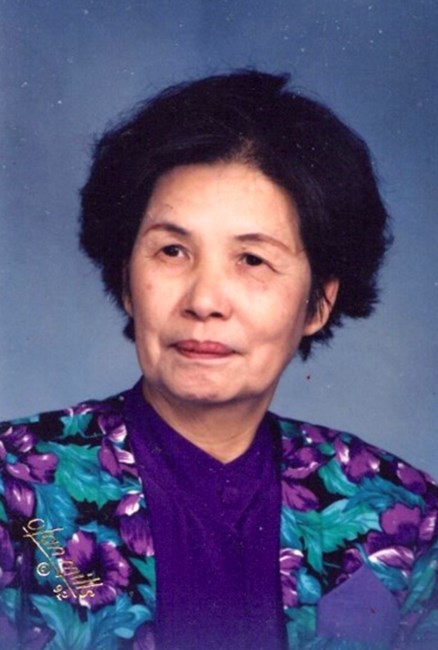
Mrs. Hang had a long life full of love, strength and perseverance. She was born on March 5, 1925, in Huanggang, Hubei. Her maternal family lived in HanYang, presently named Wuhan. She was the eldest of four children. She had a younger brother and two younger sisters who have passed away.
Mrs. Hang grew up in China during a tumultuous time. She was in high school when Japan invaded China. Sadly, her father was killed by the Japanese as he refused to work with them. Her last memory of him was he leaving the house in his favorite white suit on the day he died. After her father was killed, the family took refuge in Chongqing, where they were able to board a ship on the Yangtze River to Sichuan, their eventual home.
One day in Sichuan, her mother met a young military officer, named Ti-Chen Hang, on a boat while crossing the YangTze river. Ti-Chen Hang was part of a group of young soldiers just retreated from the battle front and his coat was still covered with blood. Even so he offered Mrs. Hang’s mother his seat on the boat. Mrs. Hang's mother was impressed with the respect he showed her and invited him and the group of soldiers to her home. After multiple visits, Mrs. Hang’s mother got to know Ti-Chen and liked him so much that she promised her eldest daughter’s hand in marriage to him in the near future. This chance meeting on a boat resulted in seventy years of marriage.
In the years followed Mrs. Hang was the Hang family's cornerstone. When the communists took over China in 1949, Mrs. Hang was pregnant with her daughter, Sufe. In order to make life better for her family, a pregnant Mrs. Hang carried her eldest two children, Syvia and Patrick, along with Ti-Chen’s younger brother and sisters to Taichung, Taiwan in the same year. Ti-Chen was in the Army at the time and ended up taking refuge in Vietnam. Mrs. Hang did all she could do to get her husband back to Taiwan safely. The Hang family reunited in Taiwan in 1950.
The family settled in the area south of the old airport in Taipei, Mrs. Hang had three more children - Christopher, Starsky and Winston. In December 1960, the family of eight moved to Sanyi New Village, Muzha, a suburb of Taipei.
After arriving in Taiwan, Mrs. Hang worked in government and civil services. She was a Warrant Officer, a telephone operator at the Air Force Headquarters, Librarian of the Ministry of National Defense Library, and a staff member of the National Military History Museum. She eventually resigned from public service to focus on her family. The family then moved to Kaohsiung where Mr. Hang served as the Director of the Kaohsiung Port Inspection Office.
Throughout her life, Mrs. Hang was a determined and dependable person. She was also generous with her time. She always made herself available to assist her husband's military academy classmates, coworkers and subordinates. No matter what the issue was, professional or personal, she was there to help.
In addition to being a supportive wife, she was devoted to her family. She dedicated many years of her life to provide for her children and was a major influence in their lives. Even under the toughest of circumstances, she was focused on and committed to her kids, who she raised and educated well. She showed the same commitment toward her grandchildren as well. When she moved from Taiwan to the United States in the early 80s, she often cared for her young grandchildren. She would make special dishes at each meal based on her grandchildren’s preferences. Her family will always remember how she expressed her love through her cooking – the aroma of stewed beef, the scent of sticky rice with Chinese sausage, the flavors of the plump dumplings and the mouthwatering noodle soups.
Throughout the years, Mrs. Hang never wavered from her Buddhist faith. In Buddhism, the heavens are referred to as the Western Pure Land or the Western Paradise. We know Mrs. Hang is there now, reunited with her husband, Ti-Chen Hang.
Mrs. Hang is survived by her six children, eleven grandchildren and eight great-grandchildren. Mrs. Hang will be deeply missed by her family, friends and all who knew her.
二0二一年十一月四日,一位賢淑的妻子和慈愛的母親、祖母和曾祖母杭朱國英在西雅圖逝世,享壽96 歲。
杭夫人一生充滿愛心、活力和毅力。 1925年3月5日出生於湖北黃岡。她母親的家人住在漢陽(現名武漢)。她是四個孩子中的老大。她有一個弟弟和兩個妹妹現皆已去世。
杭夫人在中國動蕩的年代長大。日本侵略中國時,她還是一名高中生。可悲的是,她的父親因為拒絕與當時佔領中國的日本人合作而被殺。她對父親最後的記憶是在他去世的那天。她記得他穿著自己最喜歡的白西裝離開家。父親遇害後,母親帶著杭夫人和兄弟姐妹登上了一艘從長江到四川的船到重慶避難。
有一天,夫人的母親在一艘渡江的船上遇到了一位名叫杭滌塵的年輕軍官。 杭先生是剛從前線撤退回來的一群年輕軍人中的一員,他的外套上還沾滿了鮮血。儘管如此,他還是讓座給夫人的母親。杭夫人的母親對他敬老扶幼的舉止印象深刻,於是邀請他和那群軍人到她家做客。多次拜訪後,杭夫人的母親更深一層的瞭解了滌塵,非常喜歡他,答應把大女兒許配給他。這次在船上的偶然相遇便促成了七十年美滿的姻緣。
在他們的婚姻中,杭夫人是杭家的脊柱。當共產黨佔據中國時,杭夫人懷著她的二女兒守誼。為了有更多的機會和改善當時生存的環境,懷孕的她帶著兩個孩子守玉和守正和她年幼的小叔、小姑們來到台灣台中。她的丈夫當時仍在軍隊裡,後從重慶逃至昆明,轉避越南。杭夫人竭盡全力、為丈夫平安四處奔走。 1950年,杭先生一家終於在台灣團聚。
在台北南機場雙園新村安頓下來後,杭夫人又生了三個孩子,守民、守成和守文。 一九六0年十二月,全家搬到台北市郊木柵三義新村。
到台灣後,為了幫助家計,夫人擔任過許多專業職務。例如曾任准尉、空軍總部電話接線員、國防部圖書館館理員、國家軍事歷史博物館館員。為了照顧丈夫,她辭去了公職,遷往高雄,適時杭先生在那裡擔任港檢處處長。
在她的一生中,杭夫人是一個堅定而可靠的人。她對人也很慷慨。她總是樂於幫助丈夫的軍校同學、同事和下屬。無論問題是什麼,職業相關的或個人生活,她都樂意提供幫助。
除了支持丈夫外,她還對家庭盡心盡力。她多年來一直致力於養育孩子,並對他們的成長產生了重大影響。即使在最艱難的情況下,她也專注並致力於孩子的撫養和教育。她對孫子孫女也表現出同樣的付出。 80年代初,她從台灣移居美國時,經常照顧年幼的孫子孫女。每頓飯,她都會根據孫子孫女的喜好做特色菜。她的家人永遠記得她是如何通過她的烹飪表達她的愛——燉牛肉的香味,糯米和臘腸的香味,可口的餃子和令人垂涎的麵條湯的味道。
多年來,杭夫人從未動搖過她的佛教信仰。在佛教中,天堂被稱為西方淨土或西方極樂世界。我們知道杭夫人現在在那裡,與她的丈夫杭滌塵團聚。
杭夫人有六個孩子、十一個孫子和八個曾孫。 家人、朋友和所有認識她的人都會深深懷念她。
Show your support
Add a Memory
Share Obituary
Get Reminders
Services
SHARE OBITUARYSHARE
- GET REMINDERS
v.1.18.0