OBITUARY
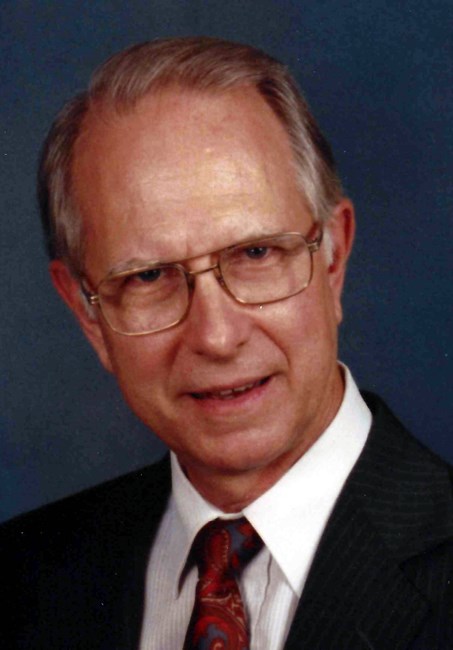
Weldon Green Cannon
April 2, 1934 – May 23, 2026
A celebration of life will be Saturday, June 13, at 11:30 a.m. at Christ Episcopal Church, 300 N. Main St., Temple, with the Rev. Keith Pozzuto officiating. Private graveside service will be at Hillcrest Cemetery, Temple.
The service will be livestreamed through the church's Facebook page (Christ Episcopal Church Temple) https://www.facebook.com/share/1D4vLZuVbR/
In lieu of flowers, memorial contributions may be made to Temple College Foundation, 2600 S. First St., Temple, TX, 76504, for the Weldon G. Cannon Teaching Scholarship; or to Christ Episcopal Church, 300 N. Main St., Temple, Texas, 76501.
Dr. Cannon was born at Euless, Texas, April 2, 1934, the son of Ross and Winnie Day Cannon. After graduating from Euless High School, he earned a bachelor’s degree from Abilene Christian University and master’s and doctorate degrees in history from Texas Christian University. He also completed additional studies at Baylor University and at Oxford University, England.
His life was filled with a love of history, art and music, always punctuated with a sense of wonder at something new. He eagerly shared his boundless curiosity with his students and friends.
He began his teaching career in Tarrant County at Birdville Haltom High School from1958-1965.
He then taught history at Temple College from 1967-1991, where he also served as division director and department chairman. His students nicknamed him “the Singing Professor” because he would break out in song to highlight points in his lectures. He was nominated in 1973 and 1988 by the Temple College faculty for the Piper Professor Award for teaching excellence.
Dr. Cannon was devoted to researching and writing Central Texas history. His dissertation on “Bernard Moore Temple: Binding Texas with Steel Rails,” documented the life and career of he namesake for the City of Temple and the civil engineer who built the Santa Fe Railway from Galveston to points across Texas. Dr. Cannon followed Temple’s career from the Civil War to his arduous job of building a railroad infrastructure through an untamed Texas wilderness. His research illuminated engineer Temple’s unique role in Texas railroad saga and dispelled erroneous information.
He spearheaded the erection of official Texas Historical Commission State Historical Markers for Bernard Moore Temple at his gravesite in Galveston and at Temple’s Santa Fe Depot.
He was also the author of “Healing on the Hill,” a history of Scott & White’s 1963 move to its current location and was co-author of the history of King’s Daughter’s Hospital.
After retirement from Temple College, Dr. Cannon documented and wrote numerous books and monographs on Texas history. Proud of his Tarrant County roots, he focused on preserving the stories and development of the 19th-century pioneer towns in the mid-cities region between Dallas and Fort Worth, highlighting the impact of industrialization and the airline industry on agricultural communities.
He also secured four official Texas State Historical Markers in Euless, one each in Bedford and Arlington, plus others in Bell, Galveston and Delta counties. His papers are archived at the Weldon Cannon collections at the City of Euless, the University of Texas at Arlington and at the Tarrant County Archives, freely open to all.
The City of Euless awarded him its Lifetime Contribution Award in 2009 for his work and service to the Euless Historical Preservation Committee. Many Cannon family artifacts are currently displayed at the Euless Museum.
Dr. Cannon was active in Bell County Historical Commission, Texas State Historical Association, Alliance for Texas History, Disciples of Christ Historical Society and numerous other historical and genealogical organizations.
An avid gardener, he propagated flowers, especially roses and peonies, from rootstock and cuttings in pioneer sites.
Most of all, he loved to regale guests with spell-binding Texas history stories, those tales often lubricated during sips of well-aged scotch and bargain wine.
He married Patricia Kay Benoit in 1990 in New York City. Together they endowed scholarships and internships to support students majoring in archival preservation, history, education and allied health. Hundreds of students have benefited from these grants.
He was preceded in death by his parents and a sister, Louise Cannon Griffith of The Woodlands. He is survived by his wife; a nephew, James William Griffith Jr. of The Woodlands; and niece, Pamela Griffith Freeman of Ely, Minnesota; and numerous nieces and nephews.
Show your support
Send Flowers
Add a Memory
Share Obituary
Get Reminders
Past Services
Private Committal Service
- SEND FLOWERSSEND
FLOWERS SHARE OBITUARYSHARE
- GET REMINDERS
v.1.18.0