
OBITUARY
April Kingsley
February 16, 1941 – June 13, 2023
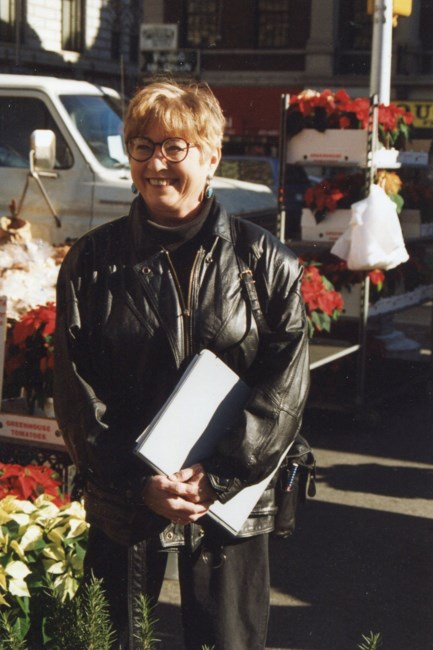
Kingsley was born in 1941 in Queens, New York, to Kingdon Edward Kingsley and Grace Consilia Haddock. She graduated from Flushing High School in New York in 1958. She studied art history with H.W. Janson at New York University and earned her MFA from the Institute of Fine Arts in 1968. Kingsley earned a PhD in art history at the City University Graduate Center in 2000.
In 1973, Kingsley wed abstract expressionist painter and author Elliot Budd Hopkins and gave birth to her only child, Grace Francesca Hopkins. Kingsley and Hopkins divorced in 1991.
Kingsley was an influential curator, an accomplished critic and historian of the arts, and the author of numerous books, catalogs, and articles on art and artists, including The Turning Point: The Abstract Expressionists and the Transformation of American Art; Emotional Impact: American Figurative Expressionism; and an exhaustive catalogue raisonné of Franz Kline.
Her impact on the arts in New York City and elsewhere is immeasurable. Her career as a curator spanned from coast to coast, starting at the Pasadena Art Museum, continuing at the Museum of Modern Art and the American Craft Museum in Manhattan, to ultimately the Kresge Art Museum where she remained until she retired in 2012.
As an independent curator, she organized many highly influential traveling exhibitions. Afro-American Abstraction launched the careers of many now famous black artists such as Jack Whitten, Ed Clark, and Mel Edwards. Early exhibits of Islamic and Greek artists were also curated by Kingsley in the 1980s. The Guerrilla Girls named her one of twenty-eight critics and curators who did the most for women artists in the 1970s and 1980s. Throughout her career she fought the prevailing inequality to feature women artists, artists of color, and rarely seen sculptors.
She is survived by her daughter Grace Hopkins, granddaughter Georgia Grace Hopkins-Lisle, her sister Grace Helene Dunegan, brother-in-law Timothy Dunegan, and nieces Jennifer Walker and Amy Ahlich.
Show your support
Add a Memory
Share Obituary
Get Reminders
Services
SHARE OBITUARYSHARE
- GET REMINDERS
v.1.18.0