
OBITUARY
Robert Michael "Bobby" Murray, Jr.
June 9, 1953 – April 30, 2026
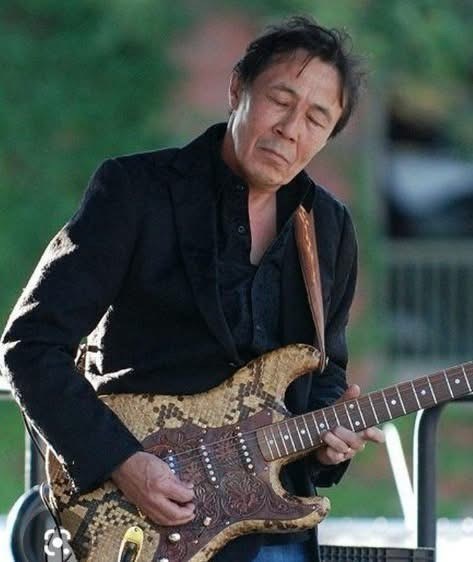
Born on June 9, 1953, in Nagoya, Japan, on a United States Air Force base, Bobby entered the world with a remarkable heritage, the son of a Japanese mother and an Irish father. Growing up in a military family, he was later raised in Tacoma, Washington, where his love for music began to take root and where his path toward becoming a celebrated blues guitarist started to unfold. Even in his earliest years, there was something unmistakable about him. He carried an aura that drew people in, lifted their spirits, and reminded them that love, purpose, and perseverance could coexist in one extraordinary life.
Bobby’s journey in music was one of dedication, mastery, and deep respect for the tradition he helped shape. He attended the same high school as Robert Cray, and together they even brought Albert Collins to perform at the school’s graduation party, an early sign that Bobby was already moving in circles where greatness recognized greatness. He began his professional career playing in blues clubs throughout the San Francisco Bay Area, where he built his reputation as a gifted guitarist with a voice all his own. He first formed an ensemble that later became Robert Cray and the Crayolas, and throughout the 1970s and 1980s he provided guitar backing for artists including Frankie Lee, Sonny Rhodes, Mark Naftalin, and many others.
His career reached extraordinary heights through his long and cherished work with some of the most respected names in blues. Bobby performed frequently with Albert Collins, Charlie Musselwhite, Otis Rush, Jimmy Witherspoon, and John Lee Hooker. In 1988, he joined Etta James’ backing ensemble, the Roots Band, and remained with her for more than 20 years. That partnership was not only musically powerful, but spiritually resonant, and it helped define a major chapter of his life. He also played and recorded with Albert King, Johnny “Guitar” Watson, Taj Mahal, Percy Mayfield, Sugar Pie DeSanto, and Lowell Fulson, leaving his mark wherever he went. He was a musician who understood that greatness is not only about skill, but about heart, humility, and the willingness to serve the song.
Bobby’s artistry reached wide audiences through recordings and performances that became part of blues history. He appeared on B. B. King’s Grammy Award-winning album Blues Summit, reuniting with Robert Cray on the track “Playing With My Friends.” He also played guitar on Etta James’ Grammy-winning recordings Let’s Roll and Blues to the Bone. His distinctive style could be heard on James’ song “Blues is My Business,” which was featured in an episode of The Sopranos. He performed with the Roots Band on The Tonight Show, Austin City Limits, and Late Night with David Letterman, and he brought his music to the 1992 Summer Olympics in Barcelona, the WOMAD Festival, and the inaugural celebration for President Bill Clinton. Bobby did not simply perform. He elevated every stage he stepped onto.
As a solo artist, Bobby continued to speak through his instrument with elegance and authority. His debut album, The Blues is Now, released in 1996, featured Frankie Lee and Freddie Hughes on vocals. Critics recognized what audiences already knew, that he was a fine guitarist whose solos carried both class and feeling. His follow-up album, Waiting for Mr. Goodfingers..., arrived in 1999, and his live album, Live & Lowdown!, was released in 2006. In 2011, the Detroit Blues Society honored him with a Lifetime Achievement Award, and he also received Detroit Music Awards in the Outstanding Instrumentalist and Outstanding Blues Performer or Group categories. His final album, Love Letters From Detroit, was released in 2021 and was later recognized as Outstanding Blues Recording of the Year at the Detroit Music Awards. Bobby’s music was not only heard. It was remembered, cherished, and felt.
Beyond his accomplishments, Bobby was a man of deep love and spiritual conviction. He held a strong relationship with the Arch Angel Michael, and he lived with a steady awareness of the power of kindness, gratitude, and light. He was always filled with love and never hesitated to remind others that he loved them. That simple truth became one of the most beautiful parts of who he was. He was loving, creative, and passionate, and those qualities were not occasional traits. They were the rhythm of his life.
Bobby is survived by the love of his life and beloved wife, Linnea, with whom he shared 27 devoted years of marriage. They were deeply grateful for each other and adored each other completely. He is also survived by his daughter, Nicole Jackson and his grandson, Aaron Graham. The love he gave his family was steady, sincere, and enduring.
As we remember Bobby Murray, we celebrate a life that was lived with purpose, artistry, and heart. He showed that a person can be both powerful and gentle, both accomplished and humble, both disciplined and deeply loving. He reminded everyone around him that music can heal, that gratitude can strengthen, and that love can lead. In the words of Maya Angelou, “People will forget what you said, people will forget what you did, but people will never forget how you made them feel.” Bobby made people feel seen, inspired, and uplifted. That is a legacy worth honoring, and it will continue to resonate wherever blues music is played and wherever love is remembered.
Show your support
Add a Memory
Share Obituary
Get Reminders
Services
SHARE OBITUARYSHARE
- GET REMINDERS
v.1.18.0